In the Bible, worship is an act of reverence and adoration that is reserved exclusively for God. This is evident throughout both the Old and New Testaments, where worship is directed towards God alone. For instance, Jesus states, “You shall worship the Lord your God, and serve Him only” (Matthew 4:10), quoting the old testament.

13. It is the LORD your God you shall fear. Him you shall serve and by his name you shall swear.

There are two words that the Greek use for worship in the Bible. The Greek word most commonly translated as “worship” in the New Testament is προσκυνέω (proskuneó) which can have meaning changed based on context. While the Greek word λατρεύω (latreuó), which means “to serve” or “to worship,” is used to describe the service and devotion that is due to God alone (McManigal2003-kt).

1. proskuneó

proskuneó is derived from two Greek words: “pros” (towards) and “kuneó” (to kiss). It literally means “to kiss towards” or “to kiss the hand” as a gesture of reverence. Proskuneó is used to describe acts involving physical gestures such as kneeling or prostration. It signifies a deep respect and adoration, whether directed towards God, Jesus, or even human figures of high rank. In the context of worshiping Jesus, proskuneó implies recognizing His divine authority and offering Him the reverence and adoration that is due to God. This is evident in passages where individuals worship Jesus without rebuke, indicating that such worship is appropriate and accepted.
- Examples in Scripture: In Matthew 2:11, the Magi proskuneó Jesus as a child. The disciples proskuneó Jesus after He calmed the storm (Matthew 14:33:). In John 9:38, the man born blind proskuneó Jesus after being healed. In Hebrews 1:6, God commands all angels to proskuneó Jesus.

Jesus is worthy of proskuneó

The term proskuneó is what most people think of when they think of worship. It is bowing down and giving reference to a figure. In the Gospel of Matthew, we see early evidence of this reverence when the Magi arrive to worship the infant Jesus.

11. And going into the house, they saw the child with Mary his mother, and they fell down and worshiped (proskuneó) him. Then, opening their treasures, they offered him gifts, gold and frankincense and myrrh.

This act of proskuneó establishes a precedent for recognizing Jesus as worthy of worship. Furthermore, in Matthew 14:33, after Jesus calms the storm, His disciples respond:

33. And those in the boat worshiped (proskuneó) him, saying, “Truly you are the Son of God.”

The New Testament consistently illustrates that Jesus not only accepts proskuneó, but also encourages it. Jesus is worshiped many times in the Gospels, and he never rebukes it (Matthew 8:2; 9:18; 14:33; 15:25; 18:26; 20:20; 28:9, 17; Mark 5:6; Luke 5:8; 24:52; John 9:38). Even though Jesus himself says:

9. And he said to him, “All these I will give you, if you will fall down and worship (proskuneó ) me.” 10. Then Jesus said to him, “Be gone, Satan! For it is written, “‘You shall worship (proskuneó ) the Lord your God and him only shall you serve.’”

Can We proskuneó To Others?

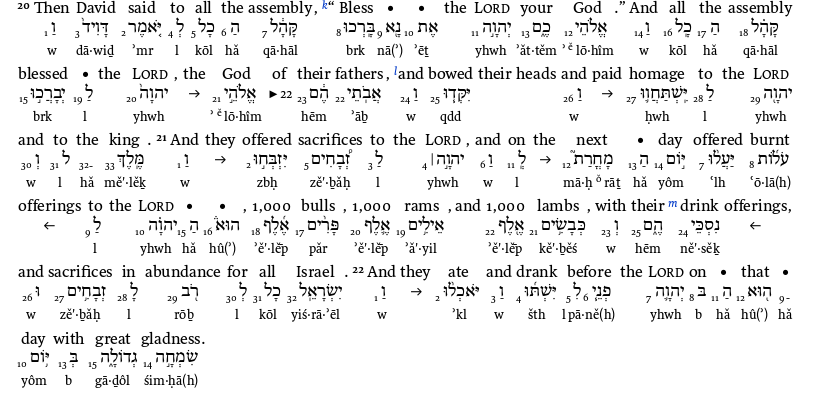
Strongs, proskuneó can mean: I go down on my knees to, do obeisance to, worship. So when someone proskuneó it can mean they are going to their knees to either do obeisance or worship. It's seems the the Bible teaches that we can proskuneó to others based on certain passages (Genesis 33:3, Exodus 18:7, Ruth 2:10, 1 Samuel 20:41, 24:8 , 25:3 , Daniel 2:46) for example in the Greek Septuagint of the Old Testament:

20. Then David said to all the assembly, “Bless the LORD your God.” And all the assembly blessed the LORD, the God of their fathers, and bowed their heads and paid homage (proskuneó) to the LORD and to the king.
1 Chronicles 29 20 Greek.png

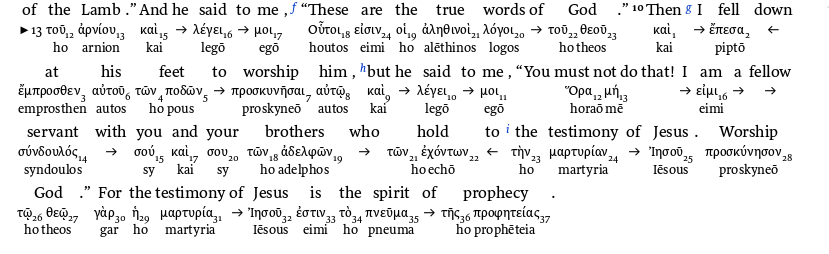
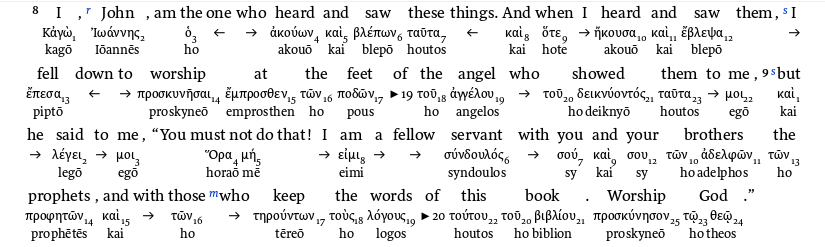
In this passage, both David and God receive proskuneó and no rebuke said of them. The original manuscripts are in Hebrew using the word (יִּֽשְׁתַּחֲו֛וּ) which like proskuneó can mean worship, or bowing down. We will need to stay with the NT scripts and contrast verses, like when Jesus said that only God can be proskuneó in the context of worship, or when John and Cornelius are rebuked for proskuneó. To see what's going on we need to get more context from the Bible. For example In the book of Revelation, John is overwhelmed by all the visions and starts to proskuneó to an angel two times, who quickly rebukes him twice.

10. Then I fell down at his feet to worship (proskuneó) him, but he said to me, “You must not do that! I am a fellow servant with you and your brothers who hold to the testimony of Jesus. Worship (proskuneó) God.” For the testimony of Jesus is the spirit of prophecy.
Revelation 19 10 Greek.png

8. I, John, am the one who heard and saw these things. And when I heard and saw them, I fell down to worship (proskuneó) at the feet of the angel who showed them to me, 9. but he said to me, “You must not do that! I am a fellow servant with you and your brothers the prophets, and with those who keep the words of this book. Worship (proskuneó) God.”
Revelation 22 8-9 Greek.png

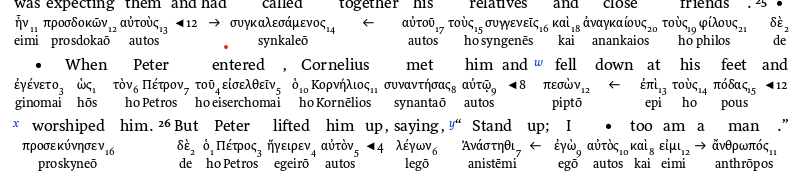
This also happens in Acts when Peter tell Cornelius not to proskuneó to him:

25. When Peter entered, Cornelius met him and fell down at his feet and worshiped (proskuneó) him. 26. But Peter lifted him up, saying, “Stand up; I too am a man.”
Acts 10 25-26 Greek.png

And Jesus himself says that only God should be proskuneó.

9. And he said to him, “All these I will give you, if you will fall down and worship (proskuneó) me.” 10. Then Jesus said to him, “Be gone, Satan! For it is written, “‘You shall worship the Lord your God and him only shall you serve.’”
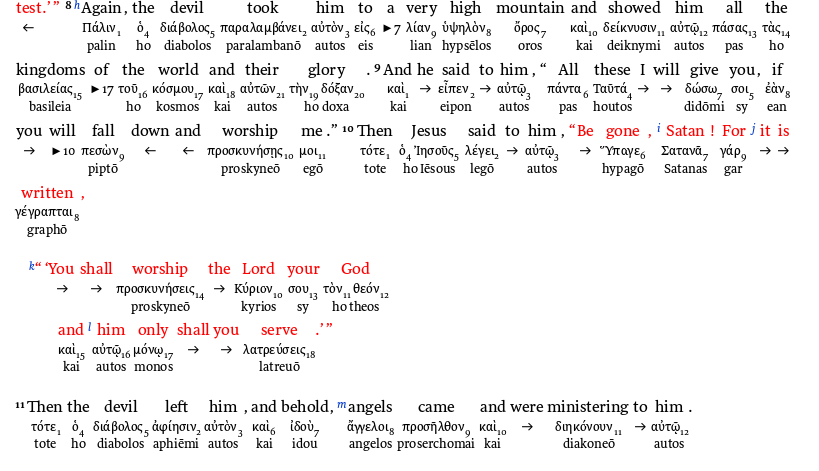
Matthew 4 9-10 Greek.png

With all four of these passages we can see the common phrase is using the word Piptó-Fall Down and proskuneó together to show worship. ("Fall Down and proskuneó", "Fell down at his feet to proskuneó " and "Fall down to proskuneó "). Very clearly there is a distinguishing of the bowing down and the proskuneó worship. In Matthew 4:9-10 The Devil asked Jesus to piptó to fall down and then to proskuneó worship him. In Matthew 2:11 the Magi were already “down” before they offered proskuneó to the KING. A clear distinction being made, there is not one incidence in the OT where anyone is described as bowing down and then worshipping other than to God or the false worship of gods.

In these passages proskuneó cannot mean "I go down on my knees" as the phrase "fall down and "I go down on my knees" would be redundant. Is is also evident that it does not mean honor or "do obeisance to" since the Bible teaches that it is wrong in these passages. You can see in Matthew 4:10 that Jesus considered this acts the same as latrueo worship (See Jesus is worthy of latreuó). So far it looks like if one is bowing down to proskuneó, or if the passage is more explicate that the person intends worship, then proskuneó should be considered worship.

Did Jesus Accept proskuneó as worship?

God the Father commands all angels to proskuneó to Jesus.

6. And again, when he brings the firstborn into the world, he says, “Let all God's angels worship (proskuneó) him.”

This is a citation from cited from the Septuagint Greek version of Deuteronomy 32:43 and Psalm 97:7 (Note, Gods/Sons of Gods comes from the word אֱלֹהִים (elohim), another article will expand on this word soon.) Both these verses use proskuneó and teach we should give that to Jesus. However, as we have seen in passages like 1 Chronicles 29:20 that doing obeisance or giving honor where due is not a sin and not worshiping. So will need to look at more examples to see if Jesus is receiving Honor due the Messiah or Worship due to God alone. Not only did Jesus never rebuke anyone for proskuneó or honoring him (Matthew 8:1-2; 9:18-19; 15:25; 18:26 20:20; Mark 5:6; Mark 15:19), but He even allows for more explicate worship (Matthew 14:33; 28:18; Luke 24:52; John 9:38) and for this "Fall down and worship (proskuneó)" that Acts, Revelation and Jesus say that should be given to God alone (Matthew 2:11, 28:9, Revelation 5:12-14). Take a look at these passages:

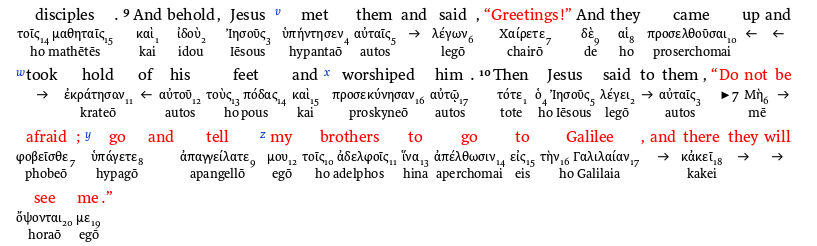
9. And behold, Jesus met them and said, “Greetings!” And they came up and took hold of his feet and worshiped him (proskuneó).
...
17. And when they saw him they worshiped (proskuneó) him, but some doubted.

Here is a picture of the Greek
Matthew 28 9-10 Greek.png

We can see that the disciples fell down at Jesus feet and then proskuneó to, just as was forbidden by Jesus in Matthew 4:10, but now accepted by him. For another example we can look at Matthew chapter 2.

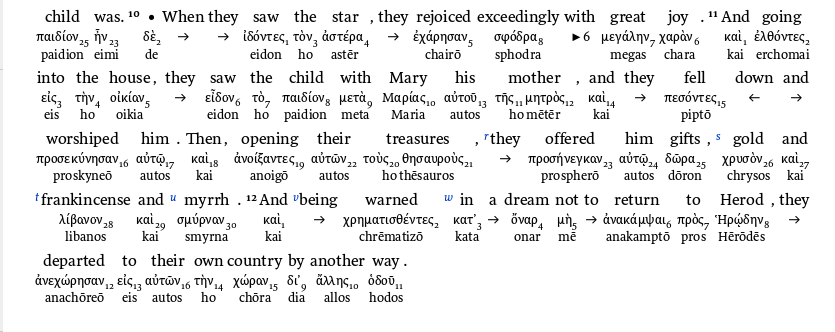
  1. Now after Jesus was born in Bethlehem of Judea in the days of Herod the king, behold, wise men from the east came to Jerusalem, 2. saying, “Where is he who has been born king of the Jews? For we saw his star when it rose and have come to worship ( proskuneó) him.” 3. When Herod the king heard this, he was troubled, and all Jerusalem with him; 4. and assembling all the chief priests and scribes of the people, he inquired of them where the Christ was to be born. 5. They told him, “In Bethlehem of Judea, for so it is written by the prophet: 6. “‘And you, O Bethlehem, in the land of Judah, are by no means least among the rulers of Judah; for from you shall come a ruler who will shepherd my people Israel.’” 7. Then Herod summoned the wise men secretly and ascertained from them what time the star had appeared. 8. And he sent them to Bethlehem, saying, “Go and search diligently for the child, and when you have found him, bring me word, that I too may come and worship ( proskuneó) him.” 9. After listening to the king, they went on their way. And behold, the star that they had seen when it rose went before them until it came to rest over the place where the child was. 10. When they saw the star, they rejoiced exceedingly with great joy. 11. And going into the house, they saw the child with Mary his mother, and they fell down and worshiped ( proskuneó) him. Then, opening their treasures, they offered him gifts, gold and frankincense and myrrh. 12. And being warned in a dream not to return to Herod, they departed to their own country by another way.

In verses 2 and 8, it is not super clear at a glance if it should be considered worship, however if you keep reading down to verse 11, we see that the wise men Fell Down and proskuneó to baby Jesus, here is the Greek for verification.
Matthew 2 10-12 Greek.png

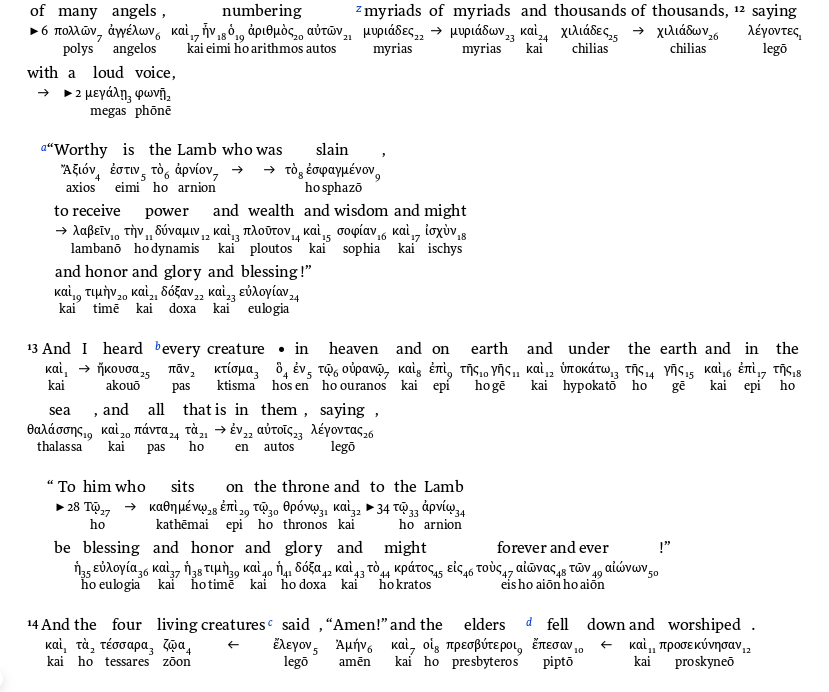
Revelation 5:12-14 provides the biggest example of this in scripture, where the Lamb (Jesus) is worshiped alongside God.

12. saying with a loud voice, “Worthy is the Lamb who was slain, to receive power and wealth and wisdom and might and honor and glory and blessing!” 13. And I heard every creature in heaven and on earth and under the earth and in the sea, and all that is in them, saying, “To him who sits on the throne and to the Lamb be blessing and honor and glory and might forever and ever!” 14. And the four living creatures said, “Amen!” and the elders fell down and worshiped (proskuneó).
Revelation 5 12-14 Greek.png

This verse can not be any clearer, ALL creation in heaven and earth, everything created says that the Lamb is to receive power and wealth and wisdom and might and honor and glory and blessing. The multitude sings, “Worthy is the Lamb who was slain,” and then fell down and proskuneó to the Lamb and God. Jesus Himself articulates His divine worthiness in John 5:23, stating:

23. that all may honor the Son, just as they honor the Father. Whoever does not honor the Son does not honor the Father who sent him.

Finally, in Luke 24:52, the disciples of Jesus perform proskuneó to Him after He was taken up to heaven. This verse is connected with verse 53 where the proskuneó is put along side blessing God, or worship.

50. And he led them out as far as Bethany, and lifting up his hands he blessed them. 51. While he blessed them, he parted from them and was carried up into heaven. 52. And they worshiped (proskuneó) him and returned to Jerusalem with great joy, 53. and were continually in the temple blessing God.

To not give Jesus the proskuneó and Worship He deserves is to ignore scripture and dishonor God the Father.

Why is proskuneó Translated Obeisance in the NWT

Some groups, mostly Arians sects or Muslims, will say that Jesus is not worshiped in the Bible but just given honor or "obeisance' instead. JWs even take it further and translate the work proskuneó in the Bible as "obeisance" instead, but only when Jesus is the subject. The idea behind this is that proskuneó only applies as worship when God is the subject, and not when a human or another figure is the subject of proskuneó.

However translations like the NWT is biased in this view, and allows proskuneó to be translated Worship when it doesn't apply it to Jesus or God, such as Demons, Angles, the Devil or the Dragon. There is also evidence that JW once believed Jesus was due worship and then changed the Bible to match the new theology.

2. Latreuó

Latreuó means to serve or minister, especially in a religious context. It is often used to describe the service or worship rendered to God. Latreuó is used to describe acts of worship and service to God. It emphasizes the aspect of serving God as an act of worship. In Biblical Greek, latreuó is always offered positively to God or, in a negative sense, to heathen gods (Moulton1930-mj).

Jesus is worthy of latreuó

latreuó is a form of worship around actions and service. These actions are always evaluated positively when God is the grammatical object and negatively with reference to any other object (Silva1994-lp). The Book of Revelation provides compelling evidence that Jesus is worshiped in the same manner as God. latreuó directed towards Jesus in Revelation affirms His divinity and equality with God, as only the true God is worthy of such worship.

Revelation

  1. Then the angel showed me the river of the water of life, bright as crystal, flowing from the throne of God and of the Lamb 2. through the middle of the street of the city; also, on either side of the river, the tree of life with its twelve kinds of fruit, yielding its fruit each month. The leaves of the tree were for the healing of the nations. 3. No longer will there be anything accursed, but the throne of God and of the Lamb will be in it, and his servants will worship (latreuó) him. 4. They will see his face, and his name will be on their foreheads. 5. And night will be no more. They will need no light of lamp or sun, for the Lord God will be their light, and they will reign forever and ever.

latreuó is the Greek word used in Revelation 22. The “His” refers to both God and the Lamb, indicating that both receive latreuó (Sam Shamoun). This is further supported by several passages that refer to both God and the Lamb with a singular phrase.

The angel delivering the revelation is sent by both God and Jesus
- In Revelation 22:6, the angel that is giving John the vision is said to be sent by God to show what must take place, however Jesus claims it is His angel in Revelation 22:16.
There is only one throne, shared by the Lamb and God (Verse 1 and 3)
- Revelation 22:3 The Lamb and God are on the same throne, and the servants will worship him. Moreover, in Revelation 20:11-15, the One seated on the throne will judge the dead. The NT clearly teaches that the Father judges no one but has entrusted all judgment to the Son. This again proves that Jesus is also sitting on the very throne of the Father (Sam Shamoun). Jesus even claims to hold Gods throne in Matthew 25:31-33.
- See Jesus Will Judge The Living And The Dead for more details.
He has servants that serve him (Verse 4).
- Revelation 20:6. Believers will reign with Christ and God (Him) for 1000 years. Jesus is shown to have priests serving him in Romans 15:15-16 and Revelation 20:4-6
His face will be seen (Verse 4).
- The Bible clearly teaches that it is the Son the believers will behold (Revelation 1:7,1 John 3:2-3)
His name will be on his servants’ foreheads (Verse 4).
- Revelation 14:1 and Revelation 3:12 shows us that it is both Jesus and God's name on the forehead, but our verse just read that it was one singular name. We can see from the rest of the NT that the Name of the Lamb and God is regarded as the same name (See The Exalted Holy Name of Jesus).
The light comes from Lord God (Verse 5)
- Revelation 21:23, The light of God is also called the lamp of the Lamb. In Revelation 22:5, this is stated again saying that only God is the light source. This is a contradiction if Jesus and God's light is not the same thing. This is also shown in the Old Testament where it says Yahweh will be the light of the city (Isaiah 60:19-20, Ezekiel 37:26-28)

When latreuó is used in Revelation to describe the service rendered to both God and the Lamb, it signifies that Jesus is not merely a revered figure but is indeed God himself. The fact that Jesus receives latreuó demonstrates that He is recognized as the true God, worthy of the same worship and service as the Father.

The Son Of Man Receives Worship

The prophet Daniel had a vision in which he clearly saw the Son of Man that Jesus claims to be in Mark 14:61-62 and Matthew 25:31-46. In this vision he sees the Son of Man receive worship.

13. “I saw in the night visions, and behold, with the clouds of heaven there came one like a son of man, and he came to the Ancient of Days and was presented before him. 14. And to him was given dominion and glory and a kingdom, that all peoples, nations, and languages should serve (latreuo) him; his dominion is an everlasting dominion, which shall not pass away, and his kingdom one that shall not be destroyed.

The word worship is the Hebrew פְּלַח pelach which means to "Serve or Worship" is the same word used though the book of Daniel (Daniel 3:12, 14, 3:17-18, 3:28; 6:20; 7:14, 7:27 ) to describe worship to other Gods and the Ancient of Days. Moreover, the Septuagint Greek translation of Daniel uses the word latreuo for pelach (@Bowman2007-gc).

Even Early Church Fathers such as Justin Martyr and Polycarp said that we should give latreuo to Jesus.

But if so great a power is shown to have followed and to be still following the dispensation of His suffering, how great shall that be which shall follow His glorious advent! For He shall come on the clouds as the Son of man, so Daniel foretold, and His angels shall come with Him. These are the words: ‘I beheld till the thrones were set; and the Ancient of days did sit, whose garment was white as snow, and the hair of His head like the pure wool. His throne was like a fiery flame, His wheels as burning fire. A fiery stream issued and came forth from before Him. Thousand thousands ministered unto Him, and ten thousand times ten thousand stood before Him. The books were opened, and the judgment was set. I beheld then the voice of the great words which the horn speaks: and the beast was beat down, and his body destroyed, and given to the burning flame. And the rest of the beasts were taken away from their dominion, and a period of life was given to the beasts until a season and time. I saw in the vision of the night, and, behold, one like the Son of man coming with the clouds of heaven; and He came to the Ancient of days, and stood before Him. And they who stood by brought Him near; and there were given Him power and kingly honour, and all nations of the earth by their families, and all glory, serve Him (latreuousa). And His dominion is an everlasting dominion, which shall not be taken away; and His kingdom shall not be destroyed. And my spirit was chilled within my frame, and the visions of my head troubled me. I came near unto one of them that stood by, and inquired the precise meaning of all these things. In answer he speaks to me, and showed me the judgment of the matters: These great beasts are four kingdoms, which shall perish from the earth, and shall not receive dominion for ever, even for ever and ever. Then I wished to know exactly about the fourth beast, which destroyed all [the others] and was very terrible, its teeth of iron, and its nails of brass; which devoured, made waste, and stamped the residue with its feet: also about the ten horns upon its head, and of the one which came up, by means of which three of the former fell. And that horn had eyes, and a mouth speaking great things; and its countenance excelled the rest. And I beheld that horn waging war against the saints, and prevailing against them, until the Ancient of days came; and He gave judgment for the saints of the Most High. And the time came, and the saints of the Most High possessed the kingdom. And it was told me concerning the fourth beast: There shall be a fourth kingdom upon earth, which shall prevail over all these kingdoms, and shall devour the whole earth, and shall destroy and make it thoroughly waste. And the ten horns are ten kings that shall arise; and one shall arise after them; and he shall surpass the first in evil deeds, and he shall subdue three kings, and he shall speak words against the Most High, and shall overthrow the rest of the saints of the Most High, and shall expect to change the seasons and the times. And it shall be delivered into his hands for a time, and times, and half a time. And the judgment sat, and they shall take away his dominion, to consume and to destroy it unto the end. And the kingdom, and the power, and the great places of the kingdoms under the heavens, were given to the holy people of the Most High, to reign in an everlasting kingdom: and all powers shall be subject to Him, and shall obey Him. Hitherto is the end of the matter. I, Daniel, was possessed with a very great astonishment, and my speech was changed in me; yet I kept the matter in my heart.’

“Therefore prepare for action and serve (douleusate) God in fear” and truth, leaving behind the empty and meaningless talk and the error of the crowd, and “believing in him who raised” our Lord Jesus Christ “from the dead and gave him glory” and a throne at his right hand; to whom all things in heaven and on earth were subjected, WHOM EVERY BREATHING CREATURE SERVES (latreuei), who is coming as “Judge of the living and the dead,” for whose blood God will hold responsible those who disobey him.

Is Jesus Due Worship?

In the Gospels you may have heard about the entry into Jerusalem where the crowds sing praises to Jesus "Blessed is He who comes in the name of the LORD" (Matthew 21:9, Mark 11:9, Luke 13:35, 19:38 , John 12:13). This is a quotation of Psalm 118:26 about the coming Messiah. The reason that the crowds are shouting "“Hosanna to the Son of David! Blessed is he who comes in the name of the Lord!" is that the they are quoting a messianic Psalm:

  1. Oh give thanks to the LORD, for he is good; for his steadfast love endures forever! 2. Let Israel say, “His steadfast love endures forever.” 3. Let the house of Aaron say, “His steadfast love endures forever.” 4. Let those who fear the LORD say, “His steadfast love endures forever.” 5. Out of my distress I called on the LORD; the LORD answered me and set me free. 6. The LORD is on my side; I will not fear. What can man do to me? 7. The LORD is on my side as my helper; I shall look in triumph on those who hate me. 8. It is better to take refuge in the LORD than to trust in man. 9. It is better to take refuge in the LORD than to trust in princes. 10. All nations surrounded me; in the name of the LORD I cut them off! 11. They surrounded me, surrounded me on every side; in the name of the LORD I cut them off! 12. They surrounded me like bees; they went out like a fire among thorns; in the name of the LORD I cut them off! 13. I was pushed hard, so that I was falling, but the LORD helped me. 14. The LORD is my strength and my song; he has become my salvation. 15. Glad songs of salvation are in the tents of the righteous: “The right hand of the LORD does valiantly, 16. the right hand of the LORD exalts, the right hand of the LORD does valiantly!” 17. I shall not die, but I shall live, and recount the deeds of the LORD. 18. The LORD has disciplined me severely, but he has not given me over to death. 19. Open to me the gates of righteousness, that I may enter through them and give thanks to the LORD. 20. This is the gate of the LORD; the righteous shall enter through it. 21. I thank you that you have answered me and have become my salvation. 22. The stone that the builders rejected has become the cornerstone. 23. This is the LORD's doing; it is marvelous in our eyes. 24. This is the day that the LORD has made; let us rejoice and be glad in it. 25. Save us, we pray, O LORD! O LORD, we pray, give us success! 26. Blessed is he who comes in the name of the LORD! We bless you from the house of the LORD. 27. The LORD is God, and he has made his light to shine upon us. Bind the festal sacrifice with cords, up to the horns of the altar! 28. You are my God, and I will give thanks to you; you are my God; I will extol you. 29. Oh give thanks to the LORD, for he is good; for his steadfast love endures forever!

In the Gospel of Matthew and Luke, we get more insight into how Jesus felt about this.

9. And the crowds that went before him and that followed him were shouting, “Hosanna to the Son of David! Blessed is he who comes in the name of the Lord! Hosanna in the highest!” 10. And when he entered Jerusalem, the whole city was stirred up, saying, “Who is this?” 11. And the crowds said, “This is the prophet Jesus, from Nazareth of Galilee.” ... 15. But when the chief priests and the scribes saw the wonderful things that he did, and the children crying out in the temple, “Hosanna to the Son of David!” they were indignant, 16. and they said to him, “Do you hear what these are saying?” And Jesus said to them, “Yes; have you never read, “‘Out of the mouth of infants and nursing babies you have prepared praise’?

37. As he was drawing near — already on the way down the Mount of Olives — the whole multitude of his disciples began to rejoice and praise God with a loud voice for all the mighty works that they had seen, 38. saying, “Blessed is the King who comes in the name of the Lord! Peace in heaven and glory in the highest!” 39. And some of the Pharisees in the crowd said to him, “Teacher, rebuke your disciples.” 40. He answered, “I tell you, if these were silent, the very stones would cry out.

To understand why the Pharisees are upset we need to know the context of the Psalm. In Psalm 118:21, it says that God has become the salvation of the people and that God is the cornerstone of Salvation.

See Jesus Is The Cornerstone To Learn More About This

The Very Stones Will Cry Out

The Pharisees knew the context of these Psalms and the praise they give is due to God alone. This is why they told Jesus "Teacher, Rebuke Your disciples". Jesus doesn't agree and defends them saying that if they fail then the very stones would cry out to praise him! In the Old Testament, the theme of creation praising God is not new. In Isaiah 55:12, we read how the mountains and hills will burst into song. Psalm 19:1 proclaims, “The heavens declare the glory of God, and the sky above proclaims his handiwork.” This establishes a precedent; creation itself recognizes and expresses the majesty of the Creator, suggesting that if humans fail to do so, other elements of creation—like stones—can take their place.

Jesus is also be using the same imagery that He does elsewhere about the cornerstone (Jesus Is The Cornerstone). In the context of the story in Luke, Jesus makes the prophesy about the stones of the temple being destroyed (See Jesus Foretold The Fall Of Jerusalem). Jesus’ statement about the ‘very stones will cry out’ in verse 40 is connected to the ‘stones that will not be left upon another’ of verse 44. Jesus is saying that the Jerusalem’s destruction—most notably the imagery of its rubble—will be an image that “will cry out” to their judgment for rejecting Him. Throughout the Old Testament of Israel’s history, whenever Jerusalem and the Temple were destroyed, it was a clear pronouncement of God’s judgment for their rejection of Him. Significantly enough, in the statement—“the very stones will cry out”—Jesus is connecting Israel’s history and their own judgment to himself; if they have rejected Him, then they have rejected God himself. To the Jews, their judgment gave them further clarity about what was true (Unknown2021-sr).

The Apostle Peter actually echoes this entire idea in 1 Peter 2 that believers would be the "Living Stones" of the temple that will praise Jesus.

4. As you come to him, a living stone rejected by men but in the sight of God chosen and precious, 5. you yourselves like living stones are being built up as a spiritual house, to be a holy priesthood, to offer spiritual sacrifices acceptable to God through Jesus Christ. 6. For it stands in Scripture: “Behold, I am laying in Zion a stone, a cornerstone chosen and precious, and whoever believes in him will not be put to shame.” 7. So the honor is for you who believe, but for those who do not believe, “The stone that the builders rejected has become the cornerstone,” 8. and “A stone of stumbling, and a rock of offense.” They stumble because they disobey the word, as they were destined to do.

Out Of The Mouth Of Babies And Infants

Jesus doesn't just refer to the Temple, but He also says the the people were good to praise him, saying of God that: "Out of the mouth of infants and nursing babies you have prepared praise" This is being quoted from Psalms that are praises to God:

  1. O LORD, our Lord, how majestic is your name in all the earth! You have set your glory above the heavens. 2. Out of the mouth of babies and infants, you have established strength because of your foes, to still the enemy and the avenger. 3. When I look at your heavens, the work of your fingers, the moon and the stars, which you have set in place, 4. what is man that you are mindful of him, and the son of man that you care for him? 5. Yet you have made him a little lower than the heavenly beings and crowned him with glory and honor. 6. You have given him dominion over the works of your hands; you have put all things under his feet, 7. all sheep and oxen, and also the beasts of the field, 8. the birds of the heavens, and the fish of the sea, whatever passes along the paths of the seas. 9. O LORD, our Lord, how majestic is your name in all the earth!

Following the Greek Septuagint, Matthew 21:16 uses “praise” instead of “strength.” The idea is that God silences His enemies and puts them to shame by the words coming out of the mouths of babies and infants who tell of the Lord’s strength. When reading in full context here, Jesus is saying that Psalm 8 is being applied to Psalm 118:20-26. The worshippers had understood what the leaders had not—that Jesus was their promised Savior. The Jewish leaders were the same as God’s Old Testament enemies who would be silenced and put to shame by children’s praise. (Unknown2020-gi).

Introduction to the "Son of Man"

The term "Son of Man" is a central and distinctive title used by Jesus in the Gospels (Hebrew: בֶּן־אָדָם, ben-adam). Jesus often referred to Himself as the "Son of Man,", in fact it seems to have been His favorite term, it is used around 80 times in the New Testament. In the Hebrew Bible, "Son of Man" generally refers to a human being or mortal, as seen in the Psalms and Ezekiel. In Ezekiel 2:1-8, the term “Son of Man” is used extensively and is typically understood as a way of addressing the prophet Ezekiel himself (Swanson2015-le). However, the most significant and debated usage of "Son of Man" is found in Daniel 7:13-14. Here, the "Son of Man" appears in a vision as a heavenly figure coming with the clouds of heaven, approaching the Ancient of Days, and receives dominion, glory, and a kingdom that all peoples, nations, and languages should serve. It as this passage that Jesus claimed for himself in His trial (Mark 14:60-64).

The "Son of Man" Passage In Daniel

In Daniel 7:13-14, the "Son of Man" is described in a vision as coming with the clouds of heaven and approaching the Ancient of Days. He is given authority, glory, and sovereign power; all nations and peoples of every language worship him. His dominion is everlasting and will not pass away, and his kingdom is one that will never be destroyed.

9. “As I looked, “thrones were set in place, and the Ancient of Days took his seat. His clothing was as white as snow; the hair of his head was white like wool. His throne was flaming with fire, and its wheels were all ablaze. 10. A river of fire was flowing, coming out from before him. Thousands upon thousands attended him; ten thousand times ten thousand stood before him. The court was seated, and the books were opened. 11. “Then I continued to watch because of the boastful words the horn was speaking. I kept looking until the beast was slain and its body destroyed and thrown into the blazing fire. 12. (The other beasts had been stripped of their authority, but were allowed to live for a period of time.) 13. “In my vision at night I looked, and there before me was one like a son of man, coming with the clouds of heaven. He approached the Ancient of Days and was led into his presence. 14. He was given authority, glory and sovereign power; all nations and peoples of every language worshiped him. His dominion is an everlasting dominion that will not pass away, and his kingdom is one that will never be destroyed.

There are two subjects, the Ancient Of Days, which is God the Father based on passages like Ezekiel chapter 1, where the his throne is descripted in the same manor with fire and wheels. Then a second person described as the Son of Man Riding On The Clouds. In Ezekiel, the prophet sees a human figure sitting on Gods throne (Ezekiel 1:26-27) as well.

Cross References Of The Son Of Man Passage

It's easy to read this passage and miss everything being claimed. It's important to cross reference your Bible and read the context slowly.

Coming On The Clouds Of Heaven?

The Cloud Rider

Daniel Boyarin observes that the phrase "Riding in the clouds", is used roughly 70 times in the Hebrew Bible (Such as Deuteronomy 33:26-27 or Psalm 104:3), consistently refers to God. In ancient Near Eastern cultures, including Jewish thought, cloud imagery was often associated with divinity. For example, in ugaritic texts the god Baal is called the "The one who rides the clouds" and it was the title of him. The old testament writes would take this title and give it to God, Deuteronomy 33:26, Psalm 68:32-33, Psalm 103:1-4 and Isaiah 19:1. This passage is the sole exception in the entire bible and its applied to a human. Everlasting Kingship was to belong only to the offspring of david, now we have a messianic king as both himan (Son of Man) and diety (The rider on the clouds) Heiser2015-it. Furthermore, Boyarin points out that the dominion, glory, and kingship given to the "Son of Man" in Daniel's vision are attributes typically reserved for God (See Attributes of God Credited To Jesus). The everlasting nature of his dominion and the universal scope of his authority suggest a role far beyond that of a mere human leader or king (Boyarin2012-pi).

The Attributes Of God Are Given To The Son Of Man
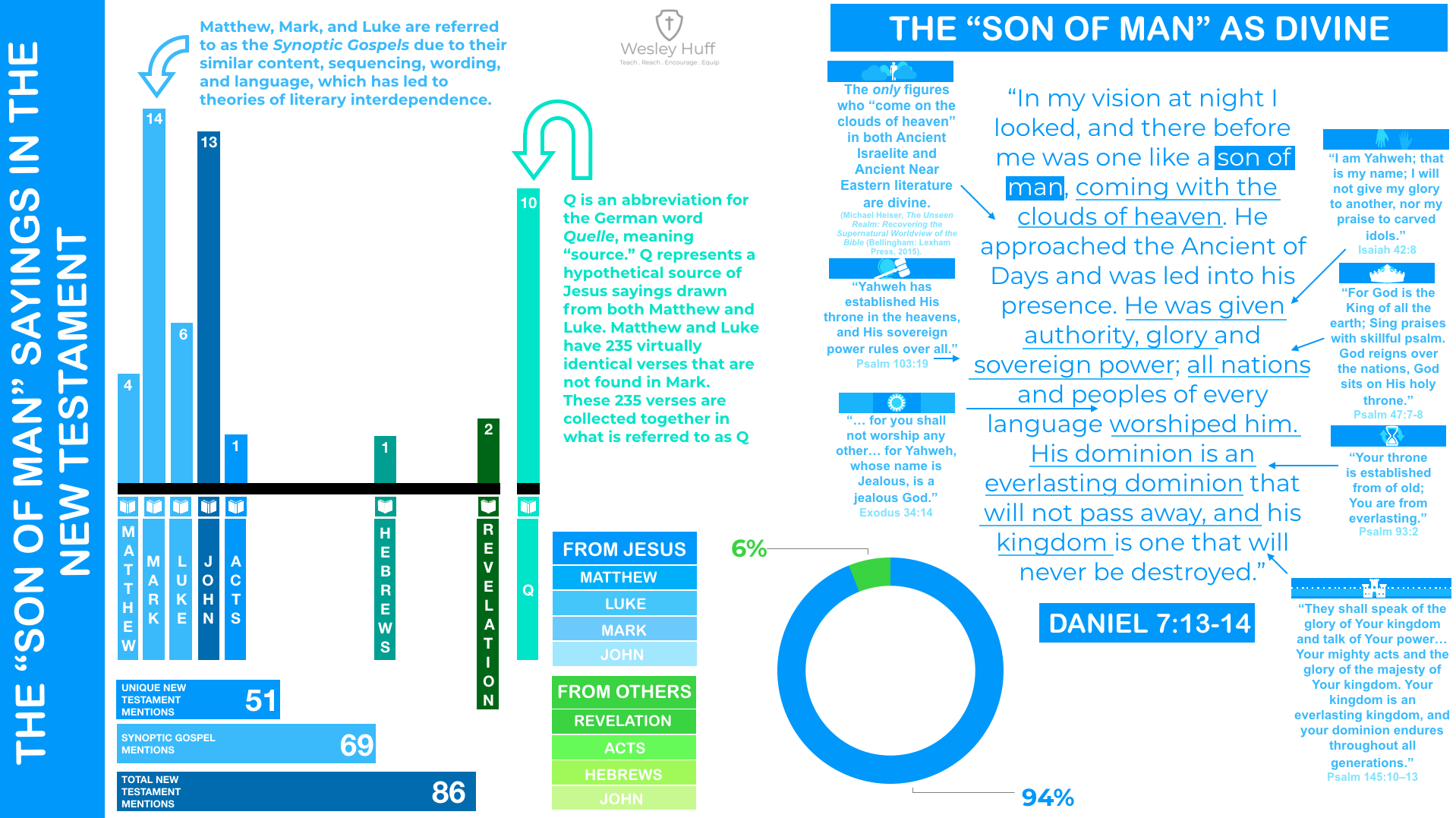
  1. Glory And Authority
    The Son Of Man in this passage was given glory and Authority by the Ancient of Days. Jesus himself claims this authority as the Son of Man in the Gospels, tying it to His ability to forgive sins (See Jesus Claims Gods Authority and Jesus Is The Forgiver Of Sins), but Isaiah the prophet said that:

8. I am the LORD; that is my name; my glory (יָקַר yâqar) I give to no other, nor my praise to carved idols.

  1. Sovereign Power
    The Son Of Man is given the Sovereign power/kingdom (מַלְכוּ malkûw) of the Ancient of Days, this is to share in the essence of the Father for the Psalms say:

  1. The LORD has established his throne in the heavens, and his kingdom (מַלְכוּ malkûw) rules over all.
  1. Reign of the Nations
    The Bible is clear that it is God alone that ultimately rules all nations.

  1. For God is the King of all the earth; sing praises with a psalm! 8. God reigns over the nations; God sits on his holy throne.
  1. Worship
    The word worship is the Hebrew פְּלַח pelach which means to "Serve or Worship" is the same word used though the book of Daniel (Daniel 3:12, 14, 3:17-18, 3:28; 6:20; 7:14, 7:27 ) to describe worship to other Gods and the Ancient of Days, see also Jesus Is Worthy Of Worship. Moreover, the Septuagint Greek translation of Daniel uses the word latreuo for pelach (@Bowman2007-gc).

  2. The Everlasting Dominion
    Everlasting in this context means no beginning and no end, a eternal kingdom that God alone controls (See also Jesus' claim to be The Alpha and Omega/First and Last):

  1. Your throne is established from of old; you are from everlasting.

10. All your works shall give thanks to you, O LORD, and all your saints shall bless you! 11. They shall speak of the glory of your kingdom and tell of your power, 12. to make known to the children of man your mighty deeds, and the glorious splendor of your kingdom. 13. Your kingdom is an everlasting kingdom, and your dominion endures throughout all generations. [The LORD is faithful in all his words and kind in all his works.]

Just Who Is The Son Of Man?

This figure has been interpreted in various ways. In Jewish thought, the Son of Man in this passage often represents an idealized Israel or a messianic figure who plays a role in the eschatological (end times) redemption. This second thought can be seen in additional Jewish texts, like the Book of Enoch from the Second Temple period, that depicts the "Son of Man" as a heavenly being (Enoch 46:1-3, Enoch 62:5-9, Enoch 69:26-29). while Ezekiel's visions (Ezekiel 1:26 and Ezekiel 8:2) describes a figure akin to "the appearance of the likeness of the glory of the LORD,".

Jesus favorite title for himself is Son of Man, but He did not mean it as a simple human as used throughout the Old Testament, but claims to be The Son of Man in Daniels visions during his trial (Mark 14:60-64, Matthew 26:57-66). It is with this context that we see He makes more claims about what the Son Of Man must do in Luke 17:24-26. Without the context of Daniel 7 and the actions/claims of Jesus in the Gospels, it's easy to miss just what Jesus is saying about himself when he calls himself the "Son of Man".The trial of Jesus, as narrated in Mark and Matthew, show us the most famous use of the title.

57. Then those who had seized Jesus led him to Caiaphas the high priest, where the scribes and the elders had gathered. 58. And Peter was following him at a distance, as far as the courtyard of the high priest, and going inside he sat with the guards to see the end. 59. Now the chief priests and the whole council were seeking false testimony against Jesus that they might put him to death, 60. but they found none, though many false witnesses came forward. At last two came forward 61. and said, “This man said, ‘I am able to destroy the temple of God, and to rebuild it in three days.’” 62. And the high priest stood up and said, “Have you no answer to make? What is it that these men testify against you?” 63. But Jesus remained silent. And the high priest said to him, “I adjure you by the living God, tell us if you are the Christ, the Son of God.” 64. Jesus said to him, “You have said so. But I tell you, from now on you will see the Son of Man seated at the right hand of Power and coming on the clouds of heaven.” 65. Then the high priest tore his robes and said, “He has uttered blasphemy. What further witnesses do we need? You have now heard his blasphemy. 66. What is your judgment?” They answered, “He deserves death.”

60. And the high priest stood up in the midst and asked Jesus, “Have you no answer to make? What is it that these men testify against you?” 61. But he remained silent and made no answer. Again the high priest asked him, “Are you the Christ, the Son of the Blessed?” 62. And Jesus said, “I am, and you will see the Son of Man seated at the right hand of Power, and coming with the clouds of heaven.” 63. And the high priest tore his garments and said, “What further witnesses do we need? 64. You have heard his blasphemy. What is your decision?” And they all condemned him as deserving death.

When confronted by the high priest about is Jesus is the Christ, Jesus not only confirms it but also claims that He is the Son of Man, and will be sitting at the right hand of Power, and coming with the clouds of heaven. This reference to Daniel 7:13 is perceived as a divine claim to be God, leading to accusations of blasphemy by the high priest, a term in Judaism defined as cursing God (according to myjewishlearning.com). This response indicates that Jesus's claim was interpreted as an assertion of divinity, given the exclusive association of such imagery with God in Jewish thought. Additionally, events like the Transfiguration (Matthew 17:1-9), where the Son of God is also called the Son of Man that would rise from the dead, or his teachings in Mark 8:31 further show his authority over life and death. Jesus use of "Son of Man" is a deliberate claim to divine authority.

All His Words Are Equal To Scripture

In the Gospels, Jesus' teachings are presented not just as teachings but as ultimate truths, God's Word itself. In passages like Mark 2:1; Matthew 5:20-22, 7:24-29, 24:35. Jesus takes God's commands in the Old Testament and adds to them, teaching that what He explains is what the God's words and Laws really meant.

In Matthew 5:20-22, Jesus doesn't just interpret the Law; He fulfills and expands it, stating, "For I tell you, unless your righteousness exceeds that of the scribes and Pharisees, you will never enter the kingdom of heaven. You have heard that it was said to those of old... But I say to you..." This shift from "You have heard" to "But I say to you" emphasizes His authority to redefine and deepen the understanding of the Law. The frequent use of the phrase "Amen, I say to you" throughout the Gospels is a testament to this divine authority. The Book of Acts continues this theme by referring to the spoken word and the Gospel as "the word of the Lord" (Acts 8:25, 13:44, 48-49;).

Similarly, in Matthew 7:24-29, Jesus concludes the Sermon on the Mount by comparing those who heed His words to a wise man who built his house on the rock, enduring all storms. The passage concludes with, "And when Jesus finished these sayings, the crowds were astonished at his teaching, for he was teaching them as one who had authority, and not as their scribes." This astonishment arises from His direct assertion of authority, contrasting with the scribes who relied on existing interpretations. Luke 4:32 and Mark 1:22 similarly notes the reaction to His teaching in the synagogues.

The Son Of Man Has Authority

Jesus' uses of the title "Son of Man" to show His divine authority. For example, in , while healing a paralytic, Jesus says:

10. But that you may know that the Son of Man has authority on earth to forgive sins” — he said to the paralytic — 11. “I say to you, rise, pick up your bed, and go home.”

This act and statement assert his divine role, as forgiving sins is traditionally exclusive to God. In Matthew 25:31-32, he describes the Son of Man's role in judgment:

31. “When the Son of Man comes in his glory, and all the angels with him, then he will sit on his glorious throne. 32. Before him will be gathered all the nations, and he will separate people one from another as a shepherd separates the sheep from the goats.

In a previous conversation with the Pharisees, Jesus references Psalm 110:1 to pose a critical question about the Messiah's lineage and nature:

41. Now while the Pharisees were gathered together, Jesus asked them a question, 42. saying, “What do you think about the Christ? Whose son is he?” They said to him, “The son of David.” 43. He said to them, “How is it then that David, in the Spirit, calls him Lord, saying, 44. “‘The Lord said to my Lord, “Sit at my right hand, until I put your enemies under your feet”’? 45. If then David calls him Lord, how is he his son?” 46. And no one was able to answer him a word, nor from that day did anyone dare to ask him any more questions.

By referring to Psalm 110:1, where David calls the Messiah 'Lord,' Jesus challenges their conventional understanding of the Messiah as merely a descendant of David. He implies that the Messiah, while a physical descendant of David, possesses a higher, divine status and nature.

The New Testament deeply emphasizes the reverence and significance attributed to the name of Jesus, paralleling, and sometimes extending, the honor, devotion, and worship traditionally reserved for God in the Old Testament.

In the Old Testament, it is God's name alone that one should call (Joel 2:32; Psalm 99:6, Psalm 145:18; Zephaniah 3:9). However the he New Testament is replete with instances where believers are encouraged to believe (1 John 3:23) and call on the name of Jesus for salvation (Matthew 10:22, 19:29; Acts 2:21, 4:12; Romans 10:12-13), forgiveness of sins (Acts 2:38; 10:43; 1 John 2:12 ), Baptism (Acts 8:16; 10:48; 19:5; 22:16; 1 Corinthians 1:13-15) and eternal life (John 1:12,John 20:31; 1 John 5:13). The Name of Jesus is used to cast out Demons (Matthew 7:22; Mark 9:38-39; Luke 10:17; Acts 16:18 ) and preform miracles.

In the early church, the disciples rejoiced that they were counted worthy to suffer dishonor for the name of Jesus(Acts 5:41; 15:26; 21:13). Epistles stress the importance of faith in the name of Jesus for sanctification(1 Corinthians 6:11), and righteous living. Believers are instructed to do everything, whether in word or deed, in the name of Jesus (Acts 3:6, Acts 3:16, 9:27;Colossians 3:17 ). Christians are warned that they will be hated and persecuted for the name (Matthew 24:9; Mark 13:13;Luke 21:12, 21:17; John 15:21; Acts 9:14; 1 Peter 4:14;).

The disciples of Jesus pray not just though him, but to him in prayer (Acts 1:24-25, 7:59-60) and advocates unwavering love and devotion towards Him (Matthew 10:37,14:26, 14:15, 14:21, 15:10; Ephesians 6:24), aligning with His divine authority. Worship (proskuneô: Jesus Is Worthy Of proskuneó) is directed towards Jesus (Matthew 2:2, 2:11; 14:33; 28:9, 28:17; Philippians 2:10-11; Hebrews 1:6), along with religious or sacred service (latreuô) specifically reserved for deity, as depicted in Daniel 7:14 and Revelation 22:1-3 (Jesus is worthy of latreuó).

Moreover, Jesus is the focal point of doxological praise (2 Timothy 4:18,Hebrews 13:20-21, Revelation 1:5-6; 5:13) and songs of praise (Ephesians 5:19, Revelation 5:9-10). Believers are instructed to approach Him with fear and reverence (2 Corinthians 5:10-11, Ephesians 5:21), and faith in Him is consistently portrayed as essential for eternal life (Matthew 9:28, John 1:12, 3:15-18, 6:35, 40).

These references collectively illustrate the profound reverence and significance accorded to the name of Jesus in the New Testament (Acts 4:17-18, 5:28, 9:21 ). It is a name that signifies salvation, authority, and the embodiment of divine grace and truth (Acts 4:7, 4:10). For believers, calling on the name of Jesus is not merely a formality but an acknowledgment of His supreme lordship and a source of empowerment, guidance, and eternal hope (Acts 2:36, 4:30; Revelation 2:3, Revelation 2:13, Revelation 3:8).

Powered by Forestry.md