Introduction
Welcome to our new series studying the Biblical Prophets. These books are among the most important in Scripture, yet they are often overlooked. The Bible read by the earliest church was the Old Testament—especially the Prophets. While the New Testament was still being written, the first Christians had grown up hearing and memorizing these stories. They knew that the prophetic books pointed to the day when the Lord would dwell with His people in a future kingdom. These promises gave them hope and prepared them to recognize the fulfillment of God’s plan in Jesus, the righteous King.
17 'Do not think that I came to abolish the Law or the Prophets; I did not come to abolish but to fulfill.
ICEBREAKER: icebreaker here.
🧭 The Prophetic Foundation
A guide to understanding the heart of God’s messengers.
1. The Core Definition: What is a Prophet?
A prophet is a divine messenger called to bring God’s specific word to a specific people in a specific moment. Their primary role was "forth-telling"—declaring God’s truth to the present generation—rather than just "fore-telling" the distant future.
- Scripture: "But if they had stood in my council, they would have proclaimed my words to my people and would have turned them from their evil ways and from their evil deeds." (Jeremiah 23:22)
2. The Ethical Purpose: Why did they speak?
Biblical prophecy is overwhelmingly ethical. When a prophet speaks of future judgment, it is a warning to repent; when they speak of future blessing, it is an incentive to persevere. The goal is not to satisfy our curiosity, but to demand a total transformation of our lives in the here and now.
- Scripture: "He has told you, O man, what is good; and what does the Lord require of you but to do justice, and to love kindness, and to walk humbly with your God?" (Micah 6:8)
3. Modern Application: How do we listen?
For the Church today, the Prophets are a call to action. We must evaluate our own ethical obedience against God’s unchanging standards of holiness, mercy, and faithfulness.
- Scripture: "For whatever was written in former days was written for our instruction, that through endurance and through the encouragement of the Scriptures we might have hope." (Romans 15:4)
Because expectations about the future directly impact our present priorities and values, prophecy was given to shape how we live today. Ultimately, all prophecy points to Jesus Christ and His sovereign rule. By viewing prophecy through this lens, we see it as a comforting assurance to encourage believers during times of severe trial, reminding them that Christ controls the chaos of human history.
📝 Recap: Isaiah and The I AM
In our 3rd lesson, we learned Prophecy functions as a Theological Dictionary. We traced the example of Gods name throughout the Old testament and learned 6 qualifiers that make His name stand above all of creation. So when we read passages in the book of John we knew what Jesus was saying about himself.
We learned that only a real God can control history, both explaining the past and knowing the future. This ties us into this lesson: what makes a prophet?
What proves a prophet?
Because anyone could falsely claim to speak for the Lord, Deuteronomy 18:21-22 laid down the ultimate test:
21 And if you say in your heart, ‘How shall we know the word which the LORD has not spoken?’— 22 when a prophet speaks in the name of the LORD, if the thing does not happen or come to pass, that is the thing which the LORD has not spoken; the prophet has spoken it presumptuously; you shall not be afraid of him.
If a prophet's prediction did not come to pass, they were a fraud speaking presumptuously, and their message was to be rejected.
To meet this standard and prove their divine commission, biblical prophets utilized a powerful combination of short-term "interim" predictions and long-term eschatological prophecies.
Short-Term Prophecies: Proving the Prophets Credentials
Short-term prophecies were designed to be fulfilled within the lifetime of the prophet or their immediate audience, acting as immediate, verifiable proof of the divine word. Written documentation of a short-term predictive message was the most foolproof way to determine whether a prophet was true or false. If God could demonstrate His management of history in events the people could see right before their eyes, it provided the evidence needed for them to trust Him for distant events they could not yet see.
- When the true prophet Jeremiah clashed with the false prophet Hananiah, Jeremiah's authority was vindicated when his short-term prediction—that Hananiah would die within a year—came true in just two months.
- Isaiah made a bold, highly specific prediction regarding the devastation of Arabia, declaring it would happen in exactly "one year" (Isaiah 21:16). A year is a very short amount of time; if he were wrong, he would have exposed himself to open mockery and danger. The immediate fulfillment of this event proved he was not speaking human guesses, but the very word of God.
Joseph's Short Term Dreams
While in prison, Joseph interpreted the dreams of Pharaoh’s cupbearer and baker.
Have someone read Genesis 40.
-
The cupbearer saw a vine with three branches that produced grapes for Pharaoh’s cup. Joseph explained that the three branches meant three days and that the cupbearer would be restored: “Within three days Pharaoh will lift up your head and restore your position…”
-
The baker saw three baskets of bread on his head, but birds were eating from them. Joseph explained the three baskets also meant three days, but instead of restoration, he would be executed: “Within three days Pharaoh will lift off your head and impale your body on a pole…”
-
Both events happened exactly as Joseph said: “He restored the chief cupbearer… but he impaled the chief baker, just as Joseph had said.”
Discussion Question "Would the prophecy be as impressive without the 3 day window?"
Long-Term Prophecy: The Test of True Deity
Once a prophet's authority was cemented by these short-term fulfillments, they were trusted with prophecies spanning centuries. Joseph proved he was a messenger in a 3-day window so he could save a nation over 14 years. Later, Pharaoh had two dreams—seven healthy cows being swallowed by seven sick cows, and seven full heads of grain being swallowed by seven thin ones (Genesis 41:1–7).
Joseph interpreted the dream, explaining what God had revealed:
29 Indeed seven years of great plenty will come throughout all the land of Egypt; 30 but after them seven years of famine will arise, and all the plenty will be forgotten in the land of Egypt; and the famine will deplete the land. 31 So the plenty will not be known in the land because of the famine following, for it will be very severe. 32 And the dream was repeated to Pharaoh twice because the thing is established by God, and God will shortly bring it to pass.
Joseph advised Pharaoh to store grain during the years of abundance in preparation for what was coming. Over time, everything happened exactly as God revealed through Joseph—first years of great abundance, followed by a severe famine that spread throughout the land.
The Bible as the Ultimate Test and Proof
Remember last lesson where we looked at the trial of the Gods where God challenges the false idols of the pagan nations. He mocks the idols for being blind and dumb, issuing the ultimate challenge to prove their deity: "Declare to us the things to come, tell us what the future holds, so we may know that you are gods" (Isaiah 41:22-23). We talked about how God was talking about current and past events to show that he knew the past and knew the future.
25 “I have raised up one from the north, And he shall come; From the rising of the sun he shall call on My name; And he shall come against princes as though mortar, As the potter treads clay.
What I didn't tell you is the entire section was future to Isaiah. God is talking about events during the Babylonian exile of when he will raise someone to take Babylon.
Discussion Question: What do you think of when you hear about Babylon in the Bible?
You see Isaiah ministered in the eighth century BC (during the reigns of Uzziah, Jotham, Ahaz, and Hezekiah), while Persia did not conquer Babylon and release the Jewish exiles until 539 BC—nearly two centuries later
If you do a google search, you will see it was the Persia that did take Babylon. Now Babylon was widely considered an impenetrable fortress. The Euphrates River flowed directly through the center of the city, acting as a massive natural moat that made a traditional siege or assault incredibly difficult. The Greek historian Herodotus recorded that the city was surrounded by massive walls equipped with a hundred gates made entirely of solid bronze, complete with bronze posts and lintels. Taking this city was not something that would be easy.
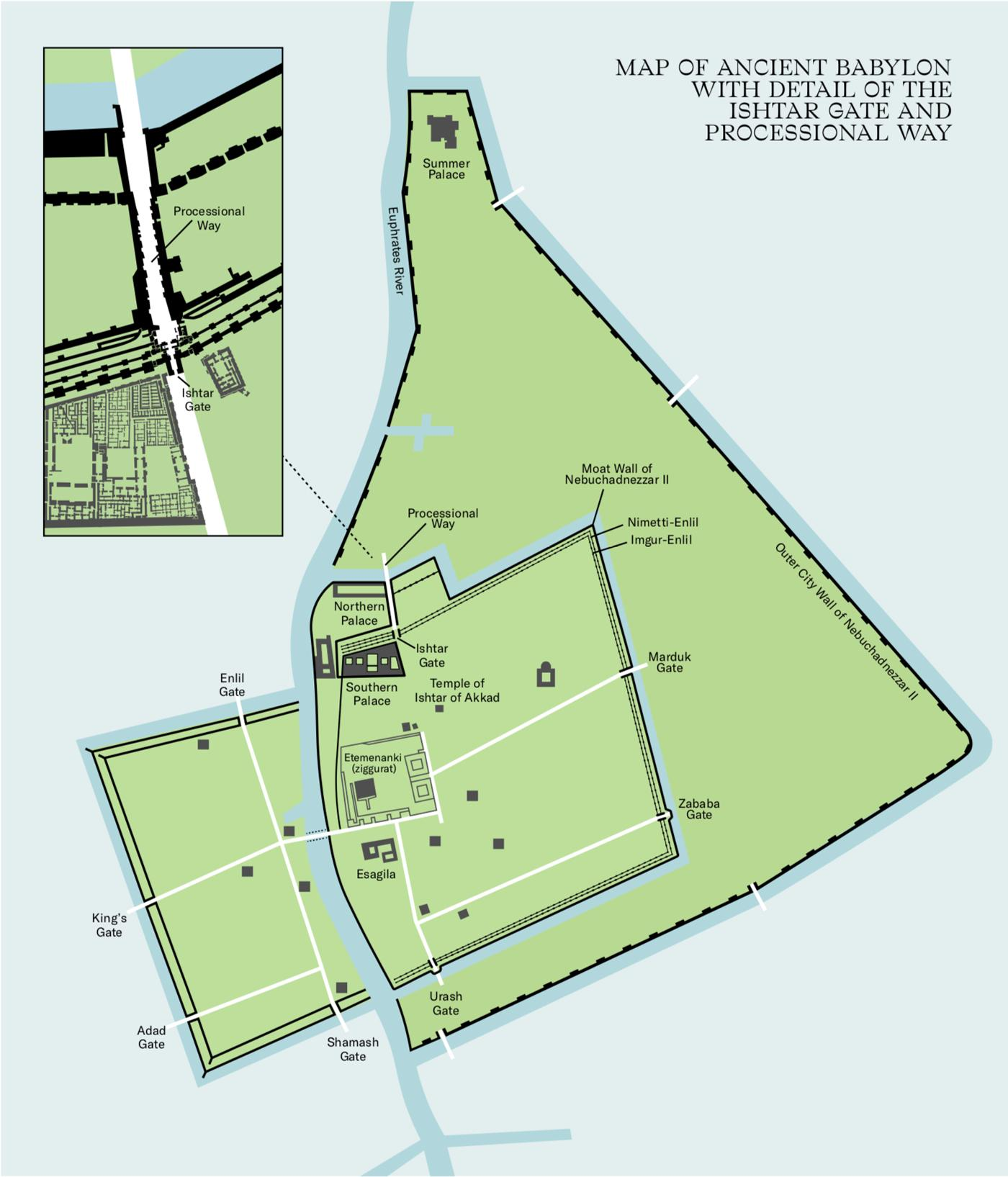
To prove that He alone is the Lord of history, God did something incredibly rare: He explicitly named the conqueror who would accomplish His will and detailed the night of the event.
21 “Remember these, O Jacob, And Israel, for you are My servant; I have formed you, you are My servant; O Israel, you will not be forgotten by Me! 22 I have blotted out, like a thick cloud, your transgressions, And like a cloud, your sins. Return to Me, for I have redeemed you.” 23 Sing, O heavens, for the LORD has done it! Shout, you lower parts of the earth; Break forth into singing, you mountains, O forest, and every tree in it! For the LORD has redeemed Jacob, And glorified Himself in Israel. 24 Thus says the LORD, your Redeemer, And He who formed you from the womb: “I am the LORD, who makes all things, Who stretches out the heavens all alone, Who spreads abroad the earth by Myself; 25 Who frustrates the signs of the babblers, And drives diviners mad; Who turns wise men backward, And makes their knowledge foolishness; 26 Who confirms the word of His servant, And performs the counsel of His messengers; Who says to Jerusalem, ‘You shall be inhabited,’ To the cities of Judah, ‘You shall be built,’ And I will raise up her waste places; 27 Who says to the deep, ‘Be dry! And I will dry up your rivers’; 28 Who says of Cyrus, ‘He is My shepherd, And he shall perform all My pleasure, Saying to Jerusalem, “You shall be built,” And to the temple, “Your foundation shall be laid.” ’
1 “Thus says the LORD to His anointed, To Cyrus, whose right hand I have held— To subdue nations before him And loose the armor of kings, To open before him the double doors, So that the gates will not be shut: 2 ‘I will go before you And make the crooked places straight; I will break in pieces the gates of bronze And cut the bars of iron. 3 I will give you the treasures of darkness And hidden riches of secret places, That you may know that I, the LORD, Who call you by your name, Am the God of Israel. 4 For Jacob My servant’s sake, And Israel My elect, I have even called you by your name; I have named you, though you have not known Me. 5 I am the LORD, and there is no other; There is no God besides Me. I will gird you, though you have not known Me,
Discussion Question: identify the specific actions God says He will take:
- C 44, V 25: What happens to the wise men? ("Go Mad")
- C 44, V 26: What about His Servant? (Be Confirmed)
- C 44, V 27: What does He do to the water? ("Be dry")
- C 45 V 1: What does He do to the doors? ("Open the double doors")
- C 45 V 2: What does He do to the bars? ("Cut the bars of iron")
- C 45 V 3: What is the reward? (Babylonian treasury)
Now I want you to remember our past lessons that prophecy is never about just telling the future.
Discussion Question: In Isaiah 45:4-5, it says Cyrus isn't a follower of God, yet God gives him victory anyways. For what reason? Look at Isaiah 44:26-28 and Isaiah 45:4-5
To break the Babylonian empire, God promises to "open before him the double doors" and "break in pieces the gates of bronze" (v. 1-2). This is a direct reference to the victory celebrated in Psalm 107:16, it's about God would free His people of their prison and chains and would prepare a path in the wilderness for them to return home to have a temple rebuilt.
Cyrus and the river
Records from Herodotus and the Greek historian Xenophon reveal that Cyrus did something no one had ever thought about. Realizing he could not breach the towering walls, Cyrus stationed his army where the Euphrates entered the city. He then had his men dig channels upstream, temporarily diverting the flow of the mighty river into a nearby marsh or lake. By lowering the water level of the Euphrates, the riverbed became shallow enough for his troops to wade directly under the city walls. But wading under the outer walls would have been a death trap if the inner bronze gates lining the riverbanks had been secured.
Did you know Daniel was there the night Cyrus attacked? In Fact, God already said what would happen that night.
In Daniel chapter 5, the text describes the dramatic events happening inside the city walls while the Persian army was executing its strategy outside. King Belshazzar was hosting a massive banquet for a thousand of his nobles, drinking wine from the sacred gold and silver goblets that his predecessor, Nebuchadnezzar, had looted from the temple in Jerusalem.
Suddenly, the fingers of a human hand appeared and began writing a cryptic message on the plaster wall of the banquet hall. The king was so terrified by the disembodied hand that his face turned pale and his knees knocked together. When none of the Babylonian enchanters or astrologers could read the writing, the queen remembered Daniel's history of interpreting dreams for Nebuchadnezzar, and the prophet was summoned before the king.
Daniel boldly interpreted the famous writing on the wall
1 Belshazzar the king made a great feast for a thousand of his lords, and drank wine in the presence of the thousand. 2 While he tasted the wine, Belshazzar gave the command to bring the gold and silver vessels which his father Nebuchadnezzar had taken from the temple which had been in Jerusalem, that the king and his lords, his wives, and his concubines might drink from them. 3 Then they brought the gold vessels that had been taken from the temple of the house of God which had been in Jerusalem; and the king and his lords, his wives, and his concubines drank from them. 4 They drank wine, and praised the gods of gold and silver, bronze and iron, wood and stone. 5 In the same hour the fingers of a man’s hand appeared and wrote opposite the lampstand on the plaster of the wall of the king’s palace; and the king saw the part of the hand that wrote. 6 Then the king’s countenance changed, and his thoughts troubled him, so that the joints of his hips were loosened and his knees knocked against each other. 7 The king cried aloud to bring in the astrologers, the Chaldeans, and the soothsayers. The king spoke, saying to the wise men of Babylon, “Whoever reads this writing, and tells me its interpretation, shall be clothed with purple and have a chain of gold around his neck; and he shall be the third ruler in the kingdom.” 8 Now all the king’s wise men came, but they could not read the writing, or make known to the king its interpretation. 9 Then King Belshazzar was greatly troubled, his countenance was changed, and his lords were astonished. 10 The queen, because of the words of the king and his lords, came to the banquet hall. The queen spoke, saying, “O king, live forever! Do not let your thoughts trouble you, nor let your countenance change. 11 There is a man in your kingdom in whom is the Spirit of the Holy God. And in the days of your father, light and understanding and wisdom, like the wisdom of the gods, were found in him; and King Nebuchadnezzar your father—your father the king—made him chief of the magicians, astrologers, Chaldeans, and soothsayers. 12 Inasmuch as an excellent spirit, knowledge, understanding, interpreting dreams, solving riddles, and explaining enigmas were found in this Daniel, whom the king named Belteshazzar, now let Daniel be called, and he will give the interpretation.” 13 Then Daniel was brought in before the king. The king spoke, and said to Daniel, “Are you that Daniel who is one of the captives from Judah, whom my father the king brought from Judah? 14 I have heard of you, that the Spirit of God is in you, and that light and understanding and excellent wisdom are found in you. 15 Now the wise men, the astrologers, have been brought in before me, that they should read this writing and make known to me its interpretation, but they could not give the interpretation of the thing. 16 And I have heard of you, that you can give interpretations and explain enigmas. Now if you can read the writing and make known to me its interpretation, you shall be clothed with purple and have a chain of gold around your neck, and shall be the third ruler in the kingdom.” 17 Then Daniel answered, and said before the king, “Let your gifts be for yourself, and give your rewards to another; yet I will read the writing to the king, and make known to him the interpretation. 18 O king, the Most High God gave Nebuchadnezzar your father a kingdom and majesty, glory and honor. 19 And because of the majesty that He gave him, all peoples, nations, and languages trembled and feared before him. Whomever he wished, he executed; whomever he wished, he kept alive; whomever he wished, he set up; and whomever he wished, he put down. 20 But when his heart was lifted up, and his spirit was hardened in pride, he was deposed from his kingly throne, and they took his glory from him. 21 Then he was driven from the sons of men, his heart was made like the beasts, and his dwelling was with the wild donkeys. They fed him with grass like oxen, and his body was wet with the dew of heaven, till he knew that the Most High God rules in the kingdom of men, and appoints over it whomever He chooses. 22 “But you his son, Belshazzar, have not humbled your heart, although you knew all this. 23 And you have lifted yourself up against the Lord of heaven. They have brought the vessels of His house before you, and you and your lords, your wives and your concubines, have drunk wine from them. And you have praised the gods of silver and gold, bronze and iron, wood and stone, which do not see or hear or know; and the God who holds your breath in His hand and owns all your ways, you have not glorified. 24 Then the fingers of the hand were sent from Him, and this writing was written. 25 “And this is the inscription that was written: MENE, MENE, TEKEL, UPHARSIN. 26 This is the interpretation of each word. MENE: God has numbered your kingdom, and finished it; 27 TEKEL: You have been weighed in the balances, and found wanting; 28 PERES: Your kingdom has been divided, and given to the Medes and Persians.” 29 Then Belshazzar gave the command, and they clothed Daniel with purple and put a chain of gold around his neck, and made a proclamation concerning him that he should be the third ruler in the kingdom. 30 That very night Belshazzar, king of the Chaldeans, was slain.
Discussion: What was God's final verdict to Belshazzar:
—Mene, Mene, Tekel, Parsin—
- Mene: God has numbered the days of your reign and brought it to an end.
- Tekel: You have been weighed on the scales and found wanting.
- Peres (singular of Parsin): Your kingdom is divided and given to the Medes and Persians.
The biblical text states that "that very night Belshazzar, king of the Babylonians, was slain"
Discussion: What Was Going On That Night in Verses 1-4?
This is where the exact timing of the attack became crucial. According to the Greek historians, the Babylonians were distracted because they were in the middle of a massive festival, feasting and dancing —the inner bronze doors along the river had been carelessly left wide open and unguarded. This very banquet recorded in Daniel 5. Because the gates were left open and the river was dried up, the Persians marched right into the royal palace with minimal resistance. The Babylonian king Belshazzar was killed that very night, and the greatest empire in the world fell essentially without a battle. Rather than a massive slaughter, there was minimal resistance and minor skirmishes. Belshazzar was the only recorded casualty. In fact, Cyrus was welcomed by the people because they preferred him over their tyrannical rulers.
In 1879, archaeologists excavating in Babylon made a monumental discovery: a barrel-shaped clay artifact known today as the Cyrus Cylinder. In it, Cyrus boasts of taking Babylon without a battle, but more importantly, it documents his unprecedented official policy toward captive peoples. Unlike the Assyrians and Babylonians who displaced and enslaved conquered nations, the Cyrus Cylinder records that Cyrus allowed displaced peoples to return to their homelands and actively assisted them in rebuilding their ruined sanctuaries and temples.
| Isaiah 44–45) | Historical & Biblical Fulfillment (Daniel/History) |
|---|---|
| "Drives diviners mad" (44:25) | The wise men could not read or interpret the writing on the wall (Daniel 5:8). |
| "Confirms the word of His servant" (44:26) | Daniel correctly interprets the message "Mene, Tekel, Peres," and it happens that very night (Daniel 5:26-30). |
| "Be dry! And I will dry up your rivers" (44:27) | Cyrus rerouted the Euphrates into a marsh, lowering the water level so troops could wade into the city (Herodotus). |
| "Open before him the double doors" (45:1) | Because of Belshazzar's banquet, the inner river gates were left open and unguarded (Daniel 5/Xenophon). |
| "Cut the bars of iron" (45:2) | This refers to the victory in Psalm 107:16, where God shatters the prison-state to free His people. |
| "Treasures of darkness" (45:3) | Cyrus seized the literal hidden hoards and gold vessels of the Babylonian treasury (History). |
| "Jerusalem... shall be built" (44:26) | In his first year, Cyrus issues a written proclamation to rebuild the Temple in Jerusalem (2 Chronicles 36:23). |
| What's crazy to see is one prophets long term prophecy became the next ones short term, as it all flowed together for God people. This dynamic is what makes the Bible entirely unique among all religious texts. The Scriptures were deliberately written down so that subsequent generations could look back and verify the prophecies against the light of historical fact. When we apply this to the Bible as a whole, we see that it is not merely a collection of moral teachings, but a cohesive record of promised predictions and dramatic fulfillments |
Can we read how this finishes out?
1 “Thus says the LORD to His anointed, To Cyrus, whose right hand I have held— To subdue nations before him And loose the armor of kings, To open before him the double doors, So that the gates will not be shut: 2 ‘I will go before you And make the crooked places straight; I will break in pieces the gates of bronze And cut the bars of iron. 3 I will give you the treasures of darkness And hidden riches of secret places, That you may know that I, the LORD, Who call you by your name, Am the God of Israel. 4 For Jacob My servant’s sake, And Israel My elect, I have even called you by your name; I have named you, though you have not known Me. 5 I am the LORD, and there is no other; There is no God besides Me. I will gird you, though you have not known Me, 6 That they may know from the rising of the sun to its setting That there is none besides Me. I am the LORD, and there is no other; 7 I form the light and create darkness, I make peace and create calamity; I, the LORD, do all these things.’ 8 “Rain down, you heavens, from above, And let the skies pour down righteousness; Let the earth open, let them bring forth salvation, And let righteousness spring up together. I, the LORD, have created it. 9 “Woe to him who strives with his Maker! Let the potsherd strive with the potsherds of the earth! Shall the clay say to him who forms it, ‘What are you making?’ Or shall your handiwork say, ‘He has no hands’? 10 Woe to him who says to his father, ‘What are you begetting?’ Or to the woman, ‘What have you brought forth?’ ” 11 Thus says the LORD, The Holy One of Israel, and his Maker: “Ask Me of things to come concerning My sons; And concerning the work of My hands, you command Me. 12 I have made the earth, And created man on it. I—My hands—stretched out the heavens, And all their host I have commanded. 13 I have raised him up in righteousness, And I will direct all his ways; He shall build My city And let My exiles go free, Not for price nor reward,” Says the LORD of hosts. 14 Thus says the LORD: “The labor of Egypt and merchandise of Cush And of the Sabeans, men of stature, Shall come over to you, and they shall be yours; They shall walk behind you, They shall come over in chains; And they shall bow down to you. They will make supplication to you, saying, ‘Surely God is in you, And there is no other; There is no other God.’ ” 15 Truly You are God, who hide Yourself, O God of Israel, the Savior! 16 They shall be ashamed And also disgraced, all of them; They shall go in confusion together, Who are makers of idols. 17 But Israel shall be saved by the LORD With an everlasting salvation; You shall not be ashamed or disgraced Forever and ever. 18 For thus says the LORD, Who created the heavens, Who is God, Who formed the earth and made it, Who has established it, Who did not create it in vain, Who formed it to be inhabited: “I am the LORD, and there is no other. 19 I have not spoken in secret, In a dark place of the earth; I did not say to the seed of Jacob, ‘Seek Me in vain’; I, the LORD, speak righteousness, I declare things that are right. 20 “Assemble yourselves and come; Draw near together, You who have escaped from the nations. They have no knowledge, Who carry the wood of their carved image, And pray to a god that cannot save. 21 Tell and bring forth your case; Yes, let them take counsel together. Who has declared this from ancient time? Who has told it from that time? Have not I, the LORD? And there is no other God besides Me, A just God and a Savior; There is none besides Me. 22 “Look to Me, and be saved, All you ends of the earth! For I am God, and there is no other. 23 I have sworn by Myself; The word has gone out of My mouth in righteousness, And shall not return, That to Me every knee shall bow, Every tongue shall take an oath. 24 He shall say, ‘Surely in the LORD I have righteousness and strength. To Him men shall come, And all shall be ashamed Who are incensed against Him. 25 In the LORD all the descendants of Israel Shall be justified, and shall glory.’ ”
God uses the rise of Cyrus to settle the debate on who is actually in charge of the universe.
- No Rivals: "I am the LORD, and there is no other; there is no God besides Me" (v. 5).
- The Creator of All: In verse 7, God claims responsibility for everything: "I form the light and create darkness, I make peace and create calamity."
The Jewish exiles might have been offended that God chose a Persian "messiah" instead of a Jewish king. God shuts down that complaining quickly.
- **"Shall the clay say to him who forms it, ‘What are you making?’" (v. 9).
God doesn't need our permission for His methods. If He wants to use a foreign king to build His city ("He shall build My city and let My exiles go free", v. 13), He will. God called Cyrus because He is the Master of History. He used a man who didn't know Him (Cyrus) to rescue a people who did know Him (Israel), so that the entire world (the ends of the earth) would realize there is only one true God. Remember all prophecy points back to the Gospel.
- "Look to Me, and be saved, all you ends of the earth!" (v. 22). God swears by Himself that eventually, "to Me every knee shall bow, every tongue shall take an oath" (v. 23).
Our motto for the DeadlyFam server is 'Til Every Gamer Hears The Gospel.
This is the Gospel, that God moved Heaven and Earth to bring Jesus into the world. This is the Gospel: Jesus died for our sins and you can call upon His Name to be saved from them.
8 But what does it say? “The word is near you, in your mouth and in your heart” (that is, the word of faith which we preach): 9 that if you confess with your mouth the Lord Jesus and believe in your heart that God has raised Him from the dead, you will be saved. 10 For with the heart one believes unto righteousness, and with the mouth confession is made unto salvation. 11 For the Scripture says, “Whoever believes on Him will not be put to shame.” 12 For there is no distinction between Jew and Greek, for the same Lord over all is rich to all who call upon Him. 13 For “whoever calls on the name of the LORD shall be saved.”
We would love to help you in making that decision. Please put a1 in the chat for salvation. If you're a Christian and need to pray for repentance, please put a 2 in the chat. When we repent, Jesus is faithful and just to forgive us for our sins. We will get you connected with our faith team upon making these decisions!