The question of whether faith is a work is central to understanding the biblical gospel. Throughout Scripture, salvation is presented as a free gift of God’s grace, received entirely through faith. If faith were a work, then salvation would be earned, and human effort would become the basis for our right standing before God.
The Scriptures make it abundantly clear that faith is not a human contribution or a work of the law. It is the empty hand that humbly receives the righteousness of another. Our salvation relies entirely on His grace and the perfect work of Christ, leaving absolutely no room for human boasting.
Salvation is of the Lord, but it is conditional on faith. Being a "responder" to a gift does not make one a "co-worker" in the purchase of that gift. John 1:12 teaches that to those who "received Him," He gave the "right to become children of God".
The Biblical Contrast Between Faith and Works
In the Bible, faith and works are placed in direct opposition to one another. The Apostle Paul continually emphasizes that human effort cannot attain the righteousness required by God. In Galatians 2:16, Paul declares that a person is not justified by the works of the law, but through faith in Jesus Christ.
16 nevertheless knowing that a man is not justified by the works of the Law but through faith in Christ Jesus, even we have believed in Christ Jesus, so that we may be justified by faith in Christ and not by the works of the Law; since by the works of the Law no flesh will be justified.
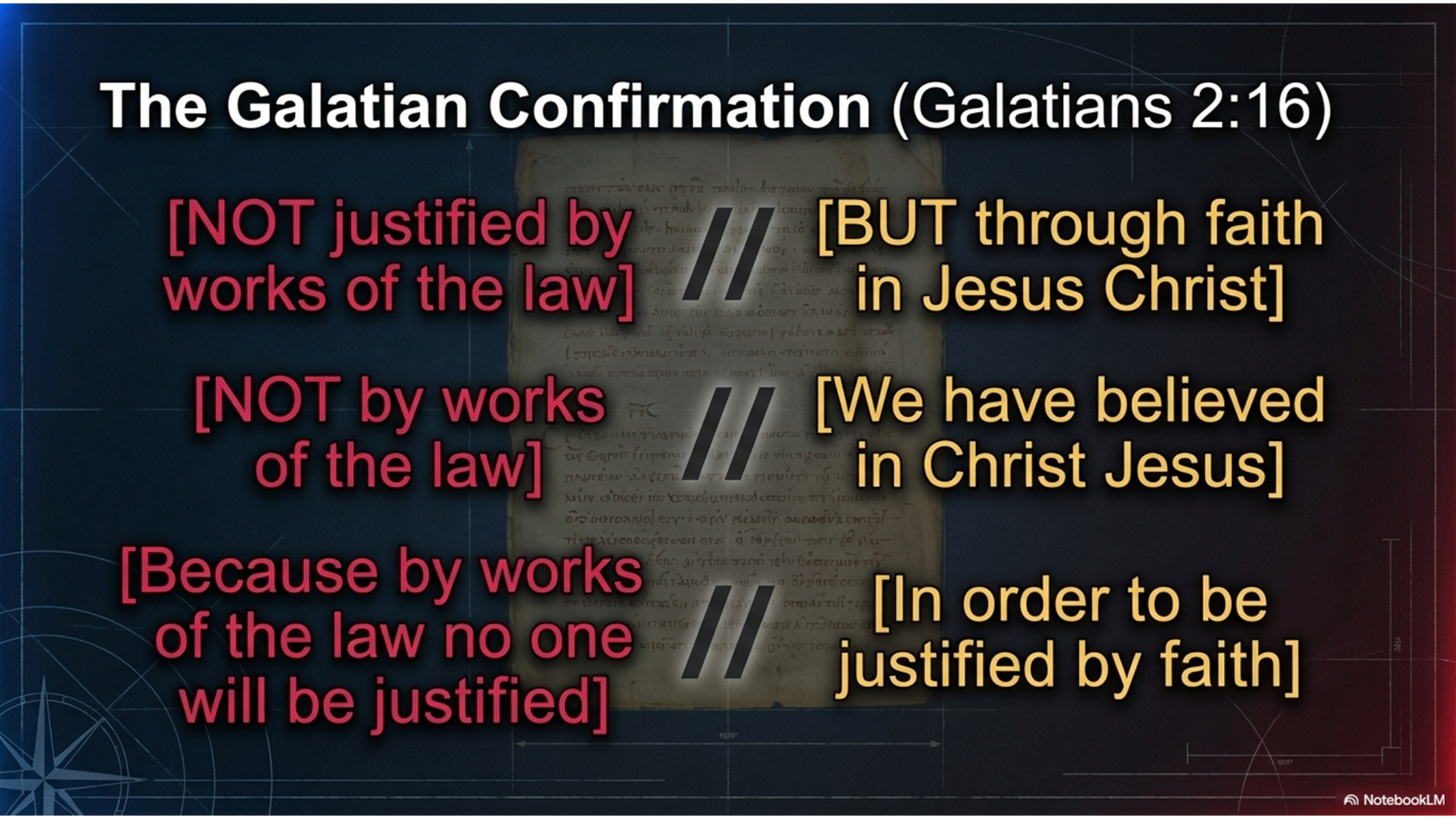
Paul explicitly denies that any human effort or "works of the law" can justify a person, replacing human works entirely with "faith in Jesus Christ". Faith is the avenue we pursue when we realize our works cannot save us.
Similarly, the letter to the Ephesians establishes that salvation is by grace through faith.
8 For by grace you have been saved through faith; and that not of yourselves, [it is] the gift of God; 9 not as a result of works, so that no one may boast.
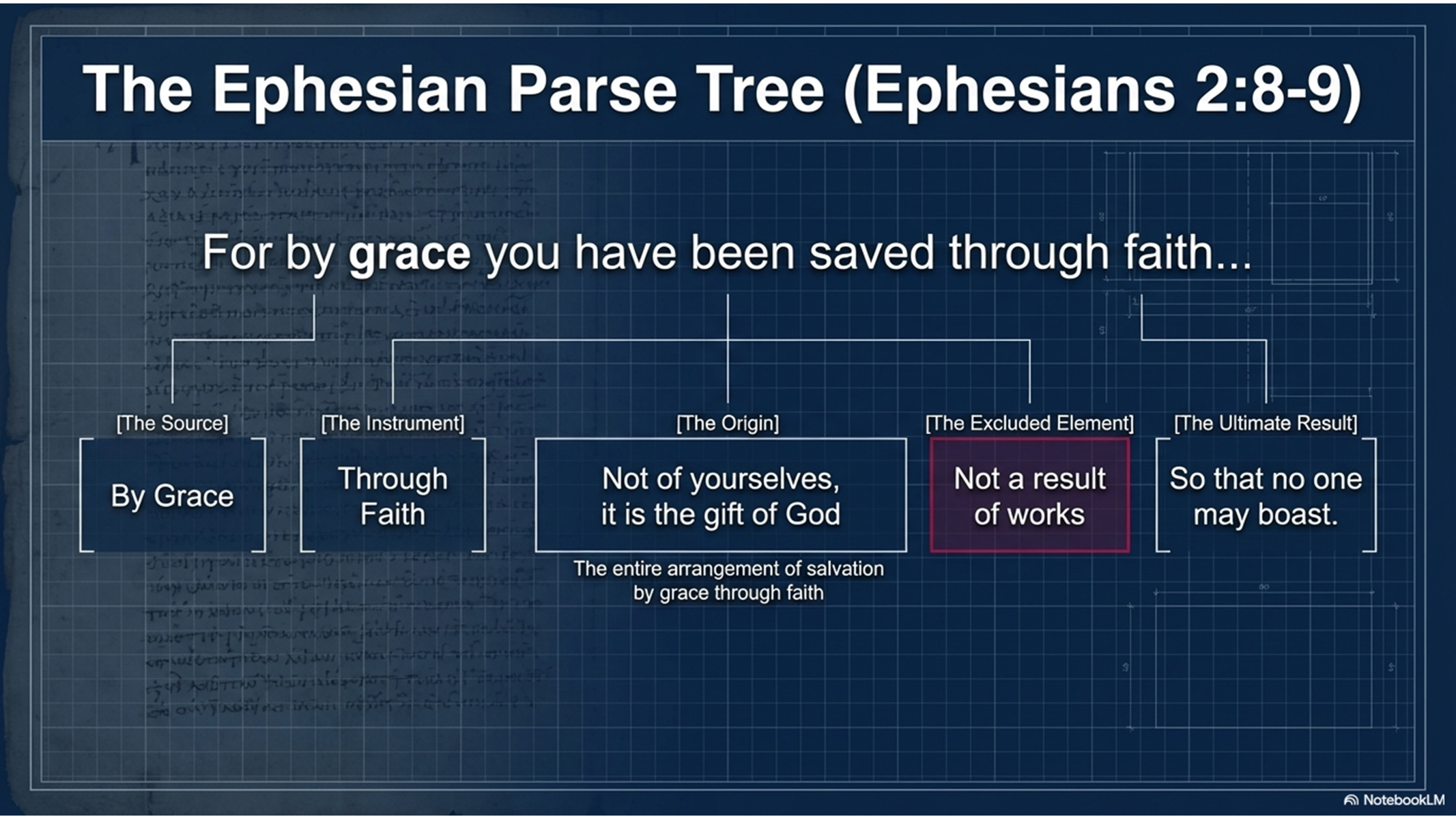
This passage explicitly separates faith and works into mutually exclusive categories. Paul states that salvation is accessed "through faith" and immediately clarifies that it is "not a result of works". If the act of believing were a work, it would give humanity a reason to boast in their own contribution, which this passage expressly forbids.
Faith Relies Entirely on Christ's Merit
Jesus perfectly illustrates this truth in Luke 18 with the parable of the Pharisee and the tax collector.
11 'The Pharisee stood and was praying this to himself: 'God, I thank You that I am not like other people: swindlers, unjust, adulterers, or even like this tax collector. 12 'I fast twice a week; I pay tithes of all that I get.' 13 'But the tax collector, standing some distance away, was even unwilling to lift up his eyes to heaven, but was beating his breast, saying, 'God, be merciful to me, the sinner!' 14 'I tell you, this man went to his house justified rather than the other; for everyone who exalts himself will be humbled, but he who humbles himself will be exalted.'
In this parable, Jesus contrasts a Pharisee who boasts in his works with a tax collector who simply begs for mercy. The tax collector did not perform a good deed; he humbly confessed his total inability to save himself. Confessing that you owe a massive debt you cannot pay does not earn forgiveness or pay off the debt. Humbly asking for mercy is the essence of faith, and Jesus declares that this humble reliance on God—not human works—is what leads to justification.
The Evidence in Romans
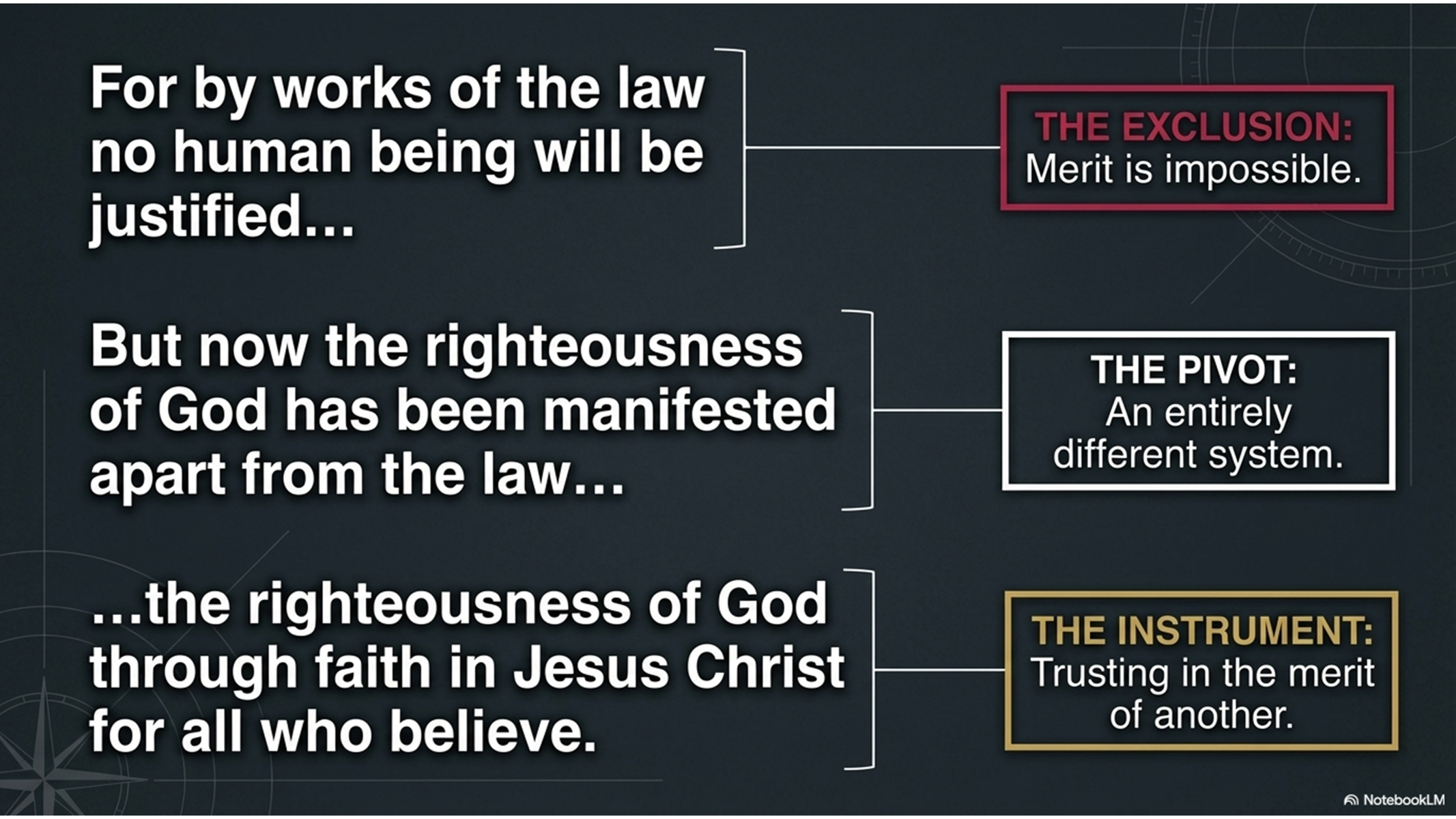
The book of Romans provides the most thorough and explicit explanation of how faith operates entirely apart from human works. In Romans 3, Paul explains that no human being will be justified in God's sight by the works of the law, since the law only brings the knowledge of sin. Instead, the righteousness of God is manifested through faith in Jesus Christ for all who believe.
27 Where then is boasting? It is excluded. By what kind of law? Of works? No, but by a law of faith.
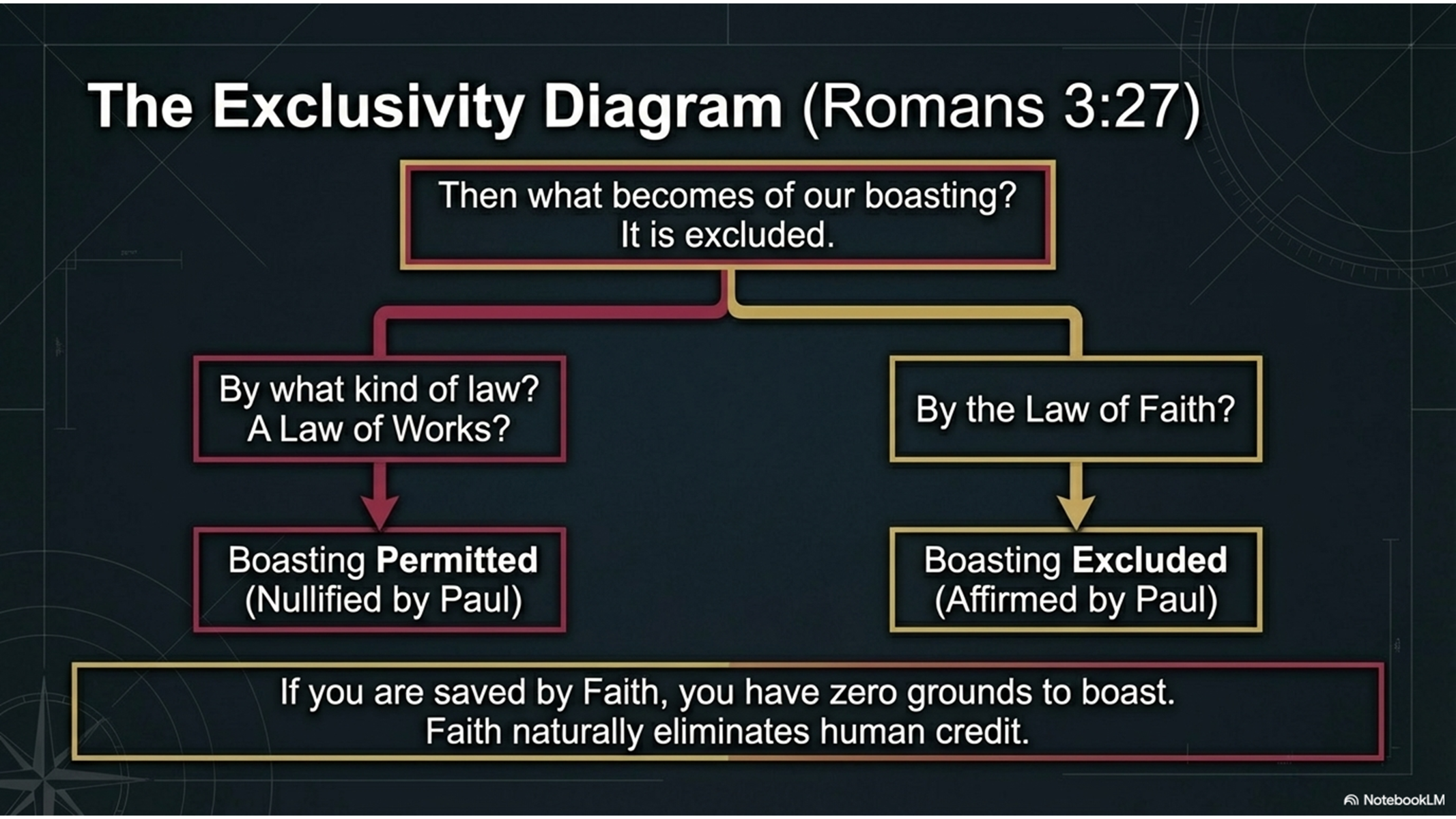
Paul states that the very nature of faith—the "law of faith"—is what fundamentally excludes boasting, proving that believing is not a work that earns anything.
2 For if Abraham was justified by works, he has something to boast about, but not before God. 3 For what does the Scripture say? 'ABRAHAM BELIEVED GOD, AND IT WAS CREDITED TO HIM AS RIGHTEOUSNESS.' 4 Now to the one who works, his wage is not credited as a favor, but as what is due. 5 But to the one who does not work, but believes in Him who justifies the ungodly, his faith is credited as righteousness,
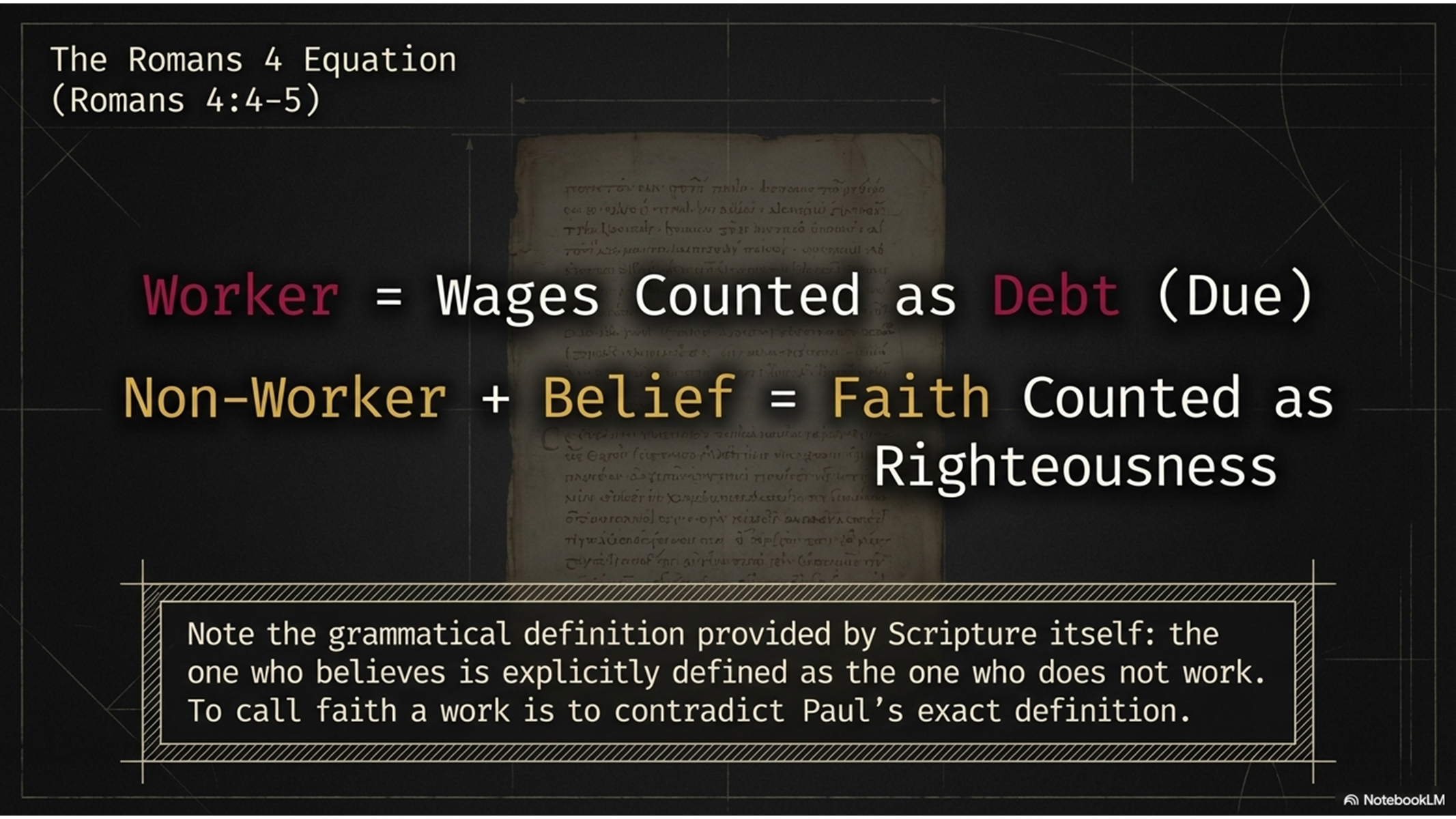
This is the most definitive proof in the Bible that faith is not a work. Paul literally defines believing as what a person does when they "do not work". Using Abraham as the primary example, Paul writes that if Abraham were justified by works, he would have something to boast about, but not before God. Instead, "Abraham believed God, and it was counted to him as righteousness". Paul then provides a definitive, clarifying statement in Romans 4:5: "And to the one who does not work but believes in him who justifies the ungodly, his faith is counted as righteousness". Biblically, believing is literally defined as what a person does when they do not work.
A worker earns a wage as a debt owed, but a believer receives a free gift by grace.
16 For this reason [it is] by faith, in order that [it may be] in accordance with grace, so that the promise will be guaranteed to all the descendants, not only to those who are of the Law, but also to those who are of the faith of Abraham, who is the father of us all,
Furthermore, Romans 4:16 explains the logic behind this design: Faith is the requirement specifically so that salvation remains a free gift of grace.
30 What shall we say then? That Gentiles, who did not pursue righteousness, attained righteousness, even the righteousness which is by faith; 31 but Israel, pursuing a law of righteousness, did not arrive at [that] law. 32 Why? Because [they did] not [pursue it] by faith, but as though [it were] by works. They stumbled over the stumbling stone,
Paul illustrates two completely opposite ways of pursuing God. Israel failed to attain righteousness because they pursued it "as if it were by works," trying to earn it through their own merit. The Gentiles attained it because they pursued it "by faith," trusting in Christ. Pursuing salvation by faith is the exact opposite of pursuing it by works.