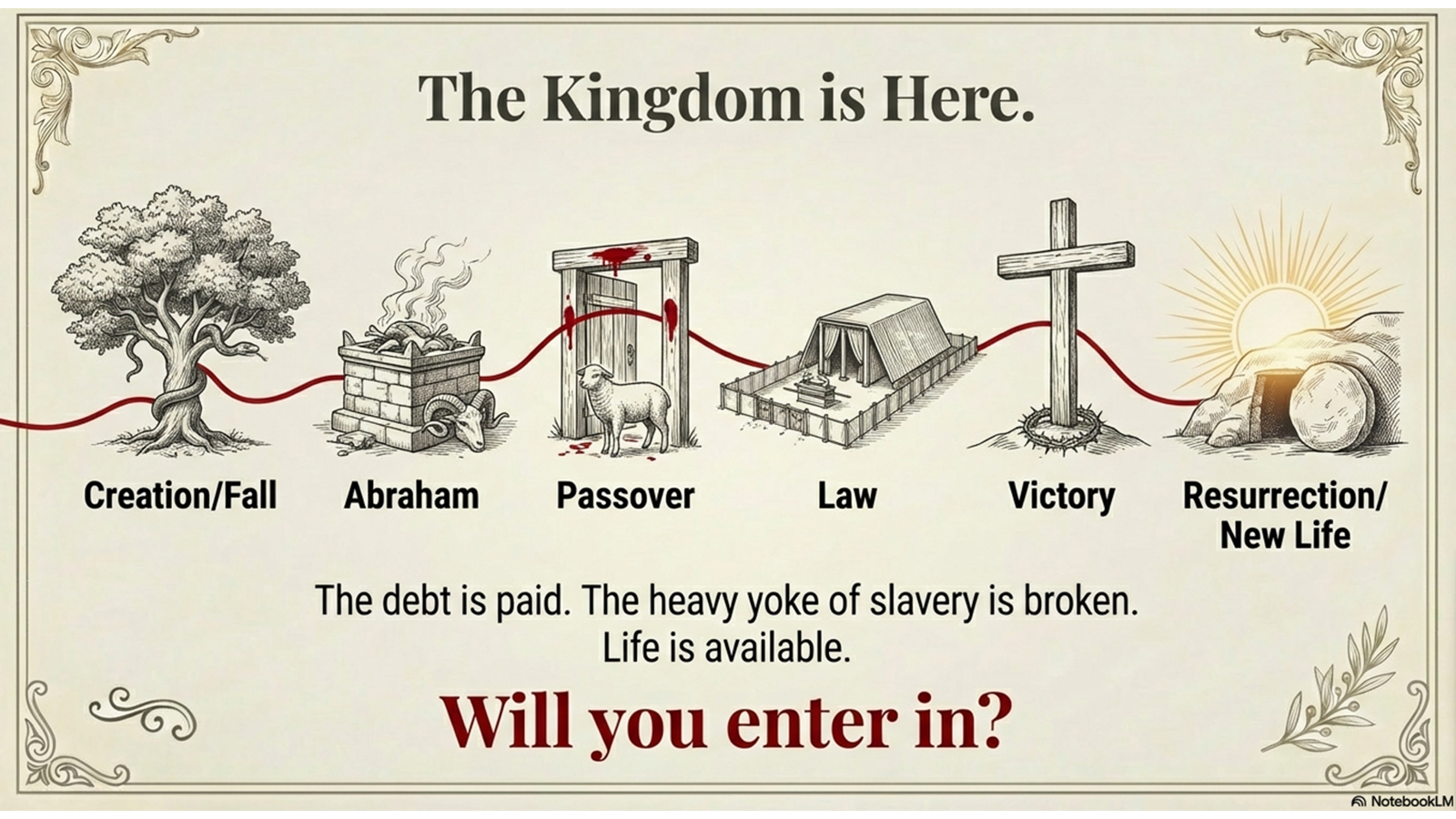
vMany people have heard the word “gospel” before, but few are sure what it actually means. Some might think it is simply summarized in John 3:16–17
16 'For God so loved the world, that He gave His only begotten Son, that whoever believes in Him shall not perish, but have eternal life. 17 'For God did not send the Son into the world to judge the world, but that the world might be saved through Him.
That verse represents more the heart of the gospel rather than the entire story.
The word translated as gospel comes from the Greek term εὐαγγέλιον (euangelion), which literally means “good news” or “glad announcement.” In the ancient world, euangelion was not a religious term at all; it referred to public news that changed reality—such as the birth of a king, the end of a war, or the announcement of a decisive military victory. When such news was proclaimed, the world was no longer the same afterward.
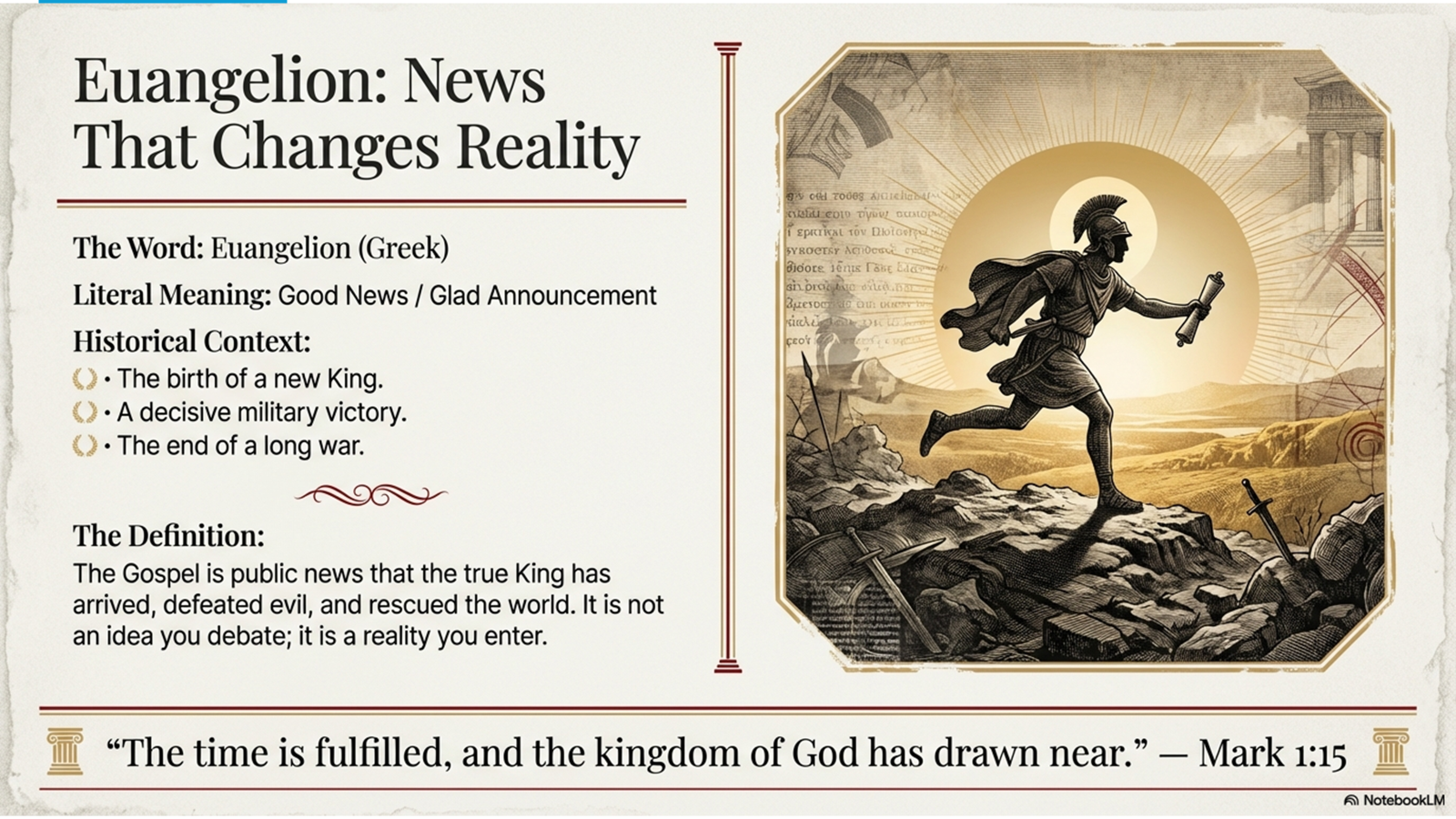
The gospel is therefore not just information—it is something that actually changes the world. Christians do not merely share ideas about Jesus; they announce something they believe has already happened.
This is how the New Testament uses the word: the true King has entered the world to rescue it and has had victory over the powers of evil that hold humanity captive.
Scripture supports this understanding, noting that “The Son of God appeared for this purpose, to destroy the works of the devil” (1 John 3:8) and to “free those who through fear of death were subject to slavery all their lives” (Hebrews 2:15). I
The gospel an announcement spoken by Jesus Himself: “The time is fulfilled, and the kingdom of God has drawn near” (Mark 1:15). God’s reign has broken into history through Jesus’ life, ministry, death, and resurrection. With that announcement comes an invitation: for people to turn from darkness and live in light of this new reality.
The name “Jesus” literally means “Yahweh saves.” He did not come simply to cover over mistakes—He came to rescue humanity from the power of sin and death itself. Jesus confronted the brokenness in the world that keeps people missing the mark, even to the point of death, taking on what was owed for sin so that humanity could be set free. This was God’s public message to the world: a declaration that sin has been dealt with, evil has been defeated, and death itself has been overcome.
Even long-term Christians sometimes struggle to grasp this concept. Understanding it requires telling the whole story of the Bible. When the gospel was first preached in the early church, it was proclaimed as a full story. Stephen, Peter, and Paul all began with God’s promises to Abraham and Israel, showing how Jesus fulfilled them. To understand the gospel, we first need to understand what sin is and why it is such a problem.
Sin and The Problem
In the New Testament, the word for sin is hamartia, which comes from the language of archery. It literally means “to miss the mark” (Ecclesiastes 7:20). God has an ideal target for human life: to love Him, love others, show mercy, and walk humbly (Micah 6:8). Yet even people who consider themselves “good” often fall short.
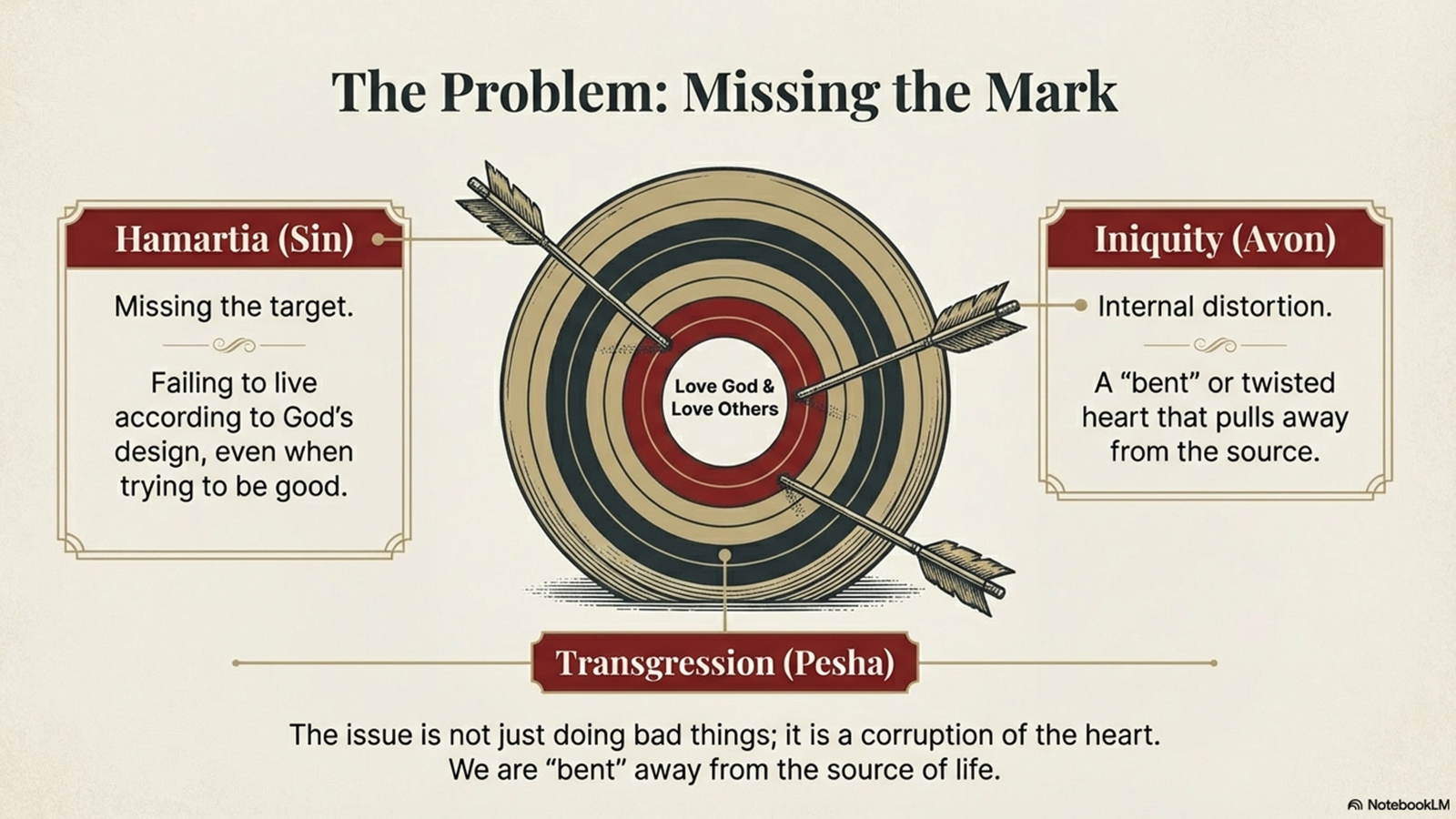
It is not just about doing bad things—it is about the ways we fail to live the way God wants. God doesn’t only want to cover our mistakes; He wants to restore us.
It is both what we do and what we fail to do. Think about the seven deadly sins—gluttony, lust, greed, sloth, wrath, envy, pride. These are the roots of countless failures. And even small, everyday choices—failing to show kindness, ignoring injustice, staying silent when we could speak—count. The Apostle Paul even admitted in Romans 7 that he often did the very things he knew were wrong.
Many people see this all the time when they talk to others. People say things like, “I’m not that bad,” or “At least I haven’t done what they’ve done.” They compare themselves to others instead of looking at their own hearts.
That is the trap. Sin isn’t about who is worse or better than someone else—it’s about what’s going on inside each of us. In the Bible, this internal corruption is called iniquity, the bent or twisted heart that pulls us away from God’s way. It is like starting off a line slightly off target: even a small deviation will eventually carry you farther and farther from the mark.
It goes all the way back to the very first pages of Scripture. In Genesis, Adam and Eve had a perfect home and a close relationship with God, but He gave them one clear instruction: not to eat from the tree of the knowledge of good and evil. The tree represented a choice. When they disobeyed, they rejected God’s authority and trusted their own understanding instead. God warned them, “If you eat from it, you will surely die” (Genesis 2:17) — not just physical death, but separation from Him, broken trust, and a disruption in the harmony of creation. At that tree was a serpent—what we understand as the devil—who was there to tempt Eve, twisting the truth and making her question God’s goodness. He made her think God was holding out on them, keeping them from something good by not letting them make choices.
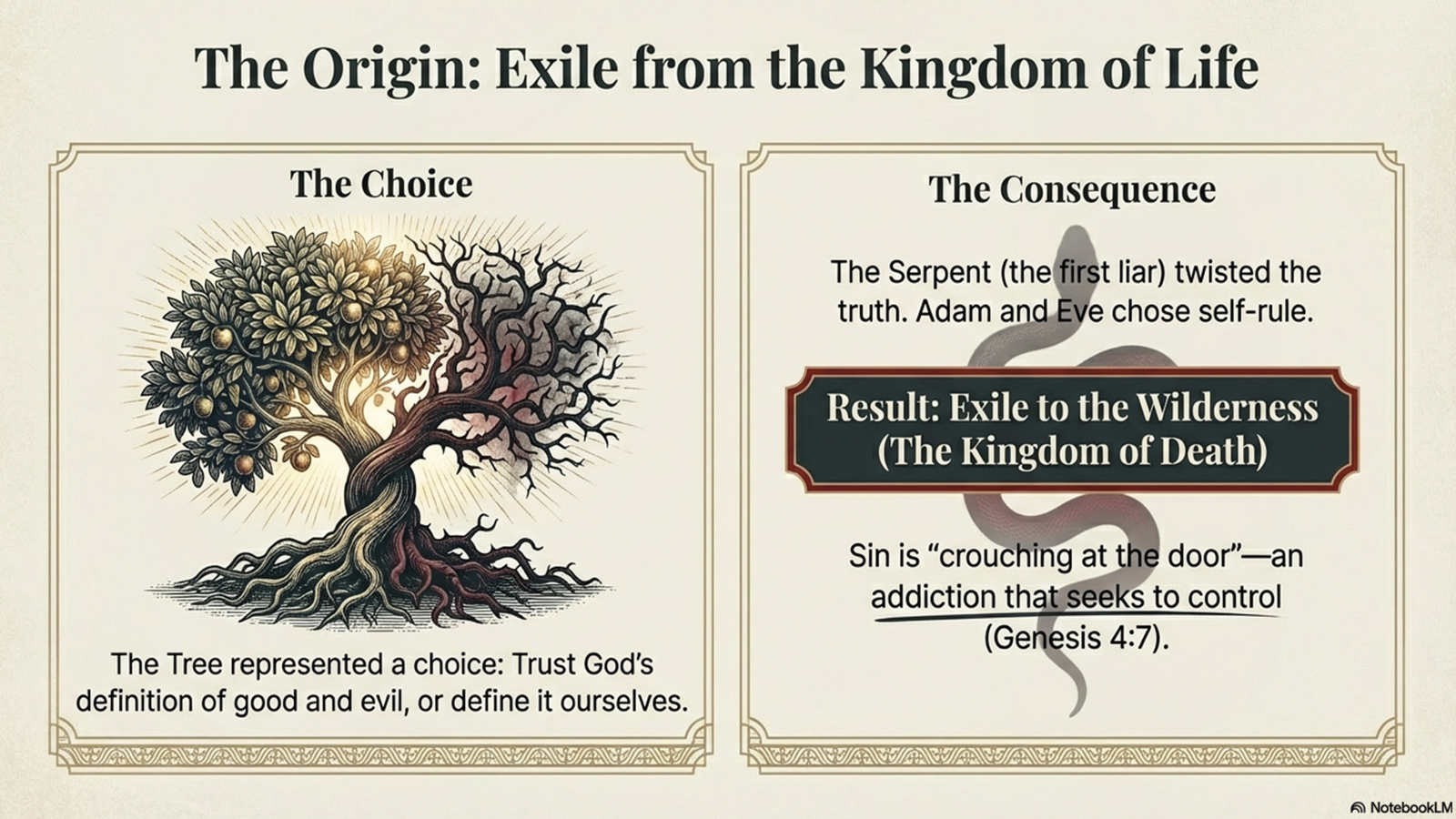
The serpent was the first liar. Because Adam and Eve chose to listen to him, they were cast from paradise into the wilderness—a metaphor for being cast from God’s kingdom into the kingdom of the devil. Work became hard, suffering and death entered the world, and access to the fullness of God’s life was lost. Adam and Eve’s rebellion introduced a pattern for all humans: we seem to have a natural tendency to put ourselves first, justify our choices, and miss the mark of the life God intended.
Yes, the devil did tempt them, but it only worked because Adam and Eve were already at the tree, in a position to make a choice for themselves. When they chose to eat, they knowingly crossed God’s clear boundary—this is what the Bible calls a transgression (peshaʿ), a willful act of rebellion against what they knew was right. But it wasn’t just the act itself; their desire to decide good and evil for themselves reveals iniquity (ʿavon)—the twisted heart, the bent toward rebellion that underlies every sin. No one likes to admit that darkness exists within, but it is precisely there that sin resides. In the stories that follow with their children, we see sin described as crouching at the door, and its desire is for us. Sin wants to control us—it becomes like an addiction that we have to resist.
That is why it had immediate consequences. That line dividing good and evil is not just the devil and us—it goes right through the heart of every human being. Sin is a problem we cannot fix on our own. God does not merely want to forgive us; He wants to change us to be who He created us to be.
God Starts His Mission To Save Us
This is what we believe happened through the cross.
C.S. Lewis once said Christians may debate how the cross works, but all agree on this: it works. Christ’s death puts humanity right with God and offers a new beginning.
It can be confusing how His death 2,000 years ago fixes something so deep inside of us. To understand, it helps to look at how God communicated His plan in the Old Testament—through covenants. When Adam and Eve rebelled, God promised a rescuer, the one who would crush the devil while taking a fatal blow himself. That promise continued with Abraham.
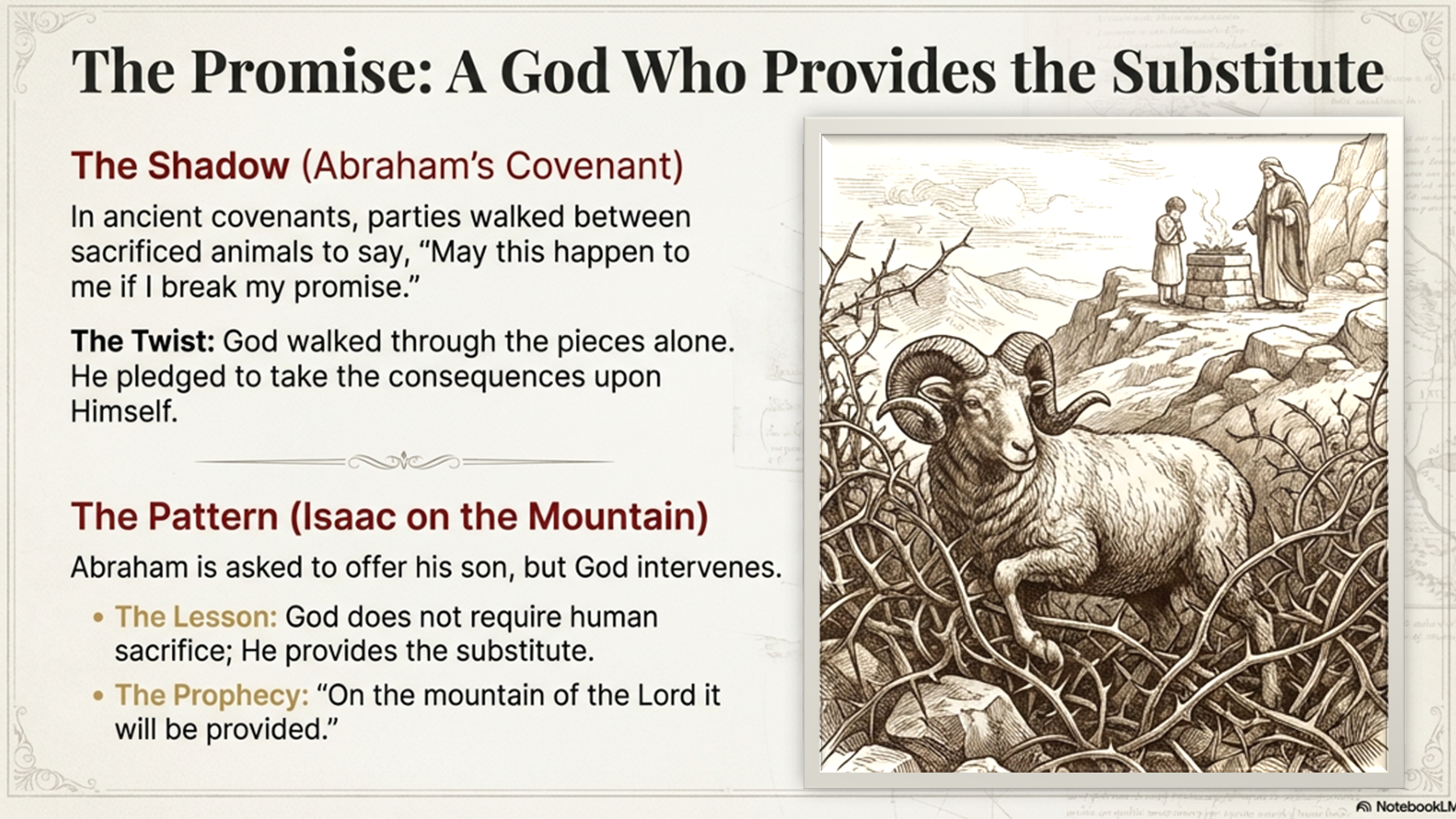
That is the Abrahamic covenant. God didn’t just make Abraham a promise—He sealed it in a way everyone at the time would understand. In the ancient world, covenants were usually made between a greater power and a lesser one, and normally both parties would walk between a sacrificed animal, cut in half. It was a vivid way of saying, “May this happen to me if I break my promise.”
But when it came time for Abraham to prepare the animals for the covenant ceremony, God did something truly shocking: Abraham never walked between them. God alone walked between the pieces. God was saying, “If this promise fails, I will take the consequences myself.” Abraham trusted God, and God counted that trust as righteousness.
People are made right with God not by what they do, but by trusting Him.
That covenant included the promise of descendants as numerous as the stars, and that through a particular child, all nations would be blessed. To see this through, God told Abraham that He would gift a specific land for this promise to reach fulfillment. Isaac grew up to be a young man ready to get married and start his own family. But then God asked Abraham to offer Isaac as a sacrifice.
Yes—God asked Abraham to sacrifice Isaac. The Bible hates child sacrifice, but this story is meant to be uncomfortable. In the past, the world used animals in covenant ceremonies, but more intense sacrifices were sadly common. Child sacrifice was a part of covenant practices to the gods. Just as God stopped Abraham from walking through the animals to teach him what His love is like, He subverted pagan expectations and distinguished Himself from the gods of the other nations.
Abraham accepted this, but not out of blind faith. He knew God had promised descendants through Isaac and trusted that God could even raise him from the dead if needed. Abraham had already seen God bring life from a dead womb with Isaac’s birth. He was fully convinced, before taking the three-day trip and ascending the mountain, that Isaac would return with him, even if a sacrifice occurred in between. The surrounding cultures expected their gods to demand human sacrifice, but God used this moment to show something radical: He does not require sin or evil. God stayed Abraham’s hand, swearing a second time by His own majesty to fulfill the promises, and He provided a male goat instead for the ceremony.
God showed He was different from the pagan gods—He provides the substitute Himself, and His kingdom is built on trust in Him, teaching Abraham—and everyone watching—that God Himself provides and fulfills what He promises. This story becomes what we call "a type," a pattern that points forward to something greater that will later be fulfilled. Abraham could be said to have received Isaac back from death in a “figurative sense.”
This story isn’t just about Abraham—it actually points forward to Jesus. Here we see a father willing to offer up his only son out of absolute faithfulness and love. This mountain would later become the place of God’s presence in Jerusalem. Abraham declared, “On the mountain of the Lord it will be provided.” It’s a preview of the Gospel and what God would accomplish through Christ. God was going to use Abraham’s children to deliver this promise.
The book of Hebrews uses Abraham’s story to make this point: it is faith in God’s promises—not our own effort—that counts. Abraham trusted God to keep His word, and that same kind of faith is what God calls us to today.
The Exodus From Death
Generations later, Abraham’s descendants became a great people—but they didn’t start free. They were enslaved in Egypt, forced to build cities and work the fields, while Pharaoh sought to destroy their future by killing the newborn boys. Egypt represents a kingdom of death, a shadow of every power opposing God.
Israel didn’t just need forgiveness—they needed rescue from the power of evil. Exodus says:
“Then the people of Israel groaned because of their slavery and cried out for help. Their cry for rescue from slavery came up to God” (Exodus 2:23–24, NASB).
Jesus connects this too, saying anyone who sins is enslaved to it.
Just as God had promised Abraham, He did not abandon His people. God raised up a deliverer, Moses, with his brother Aaron as a messenger. The burning bush story shows God appearing in fire and saying:
“So now, go, I am sending you to Pharaoh to bring My people out of Egypt” (Exodus 3:10, NASB).
When Moses feared they wouldn’t believe him, God said:
“I AM WHO I AM… Thus you shall say to the sons of Israel, ‘I AM has sent me to you’” (Exodus 3:14).
God used Moses and Aaron to show wonders, bringing judgment on Egypt while preserving Israel. This rescue included the 10 plagues. It reached its climax on the night of the Passover, when God Himself came down to lead Israel out of the kingdom, entering as the agent of death and judgment.
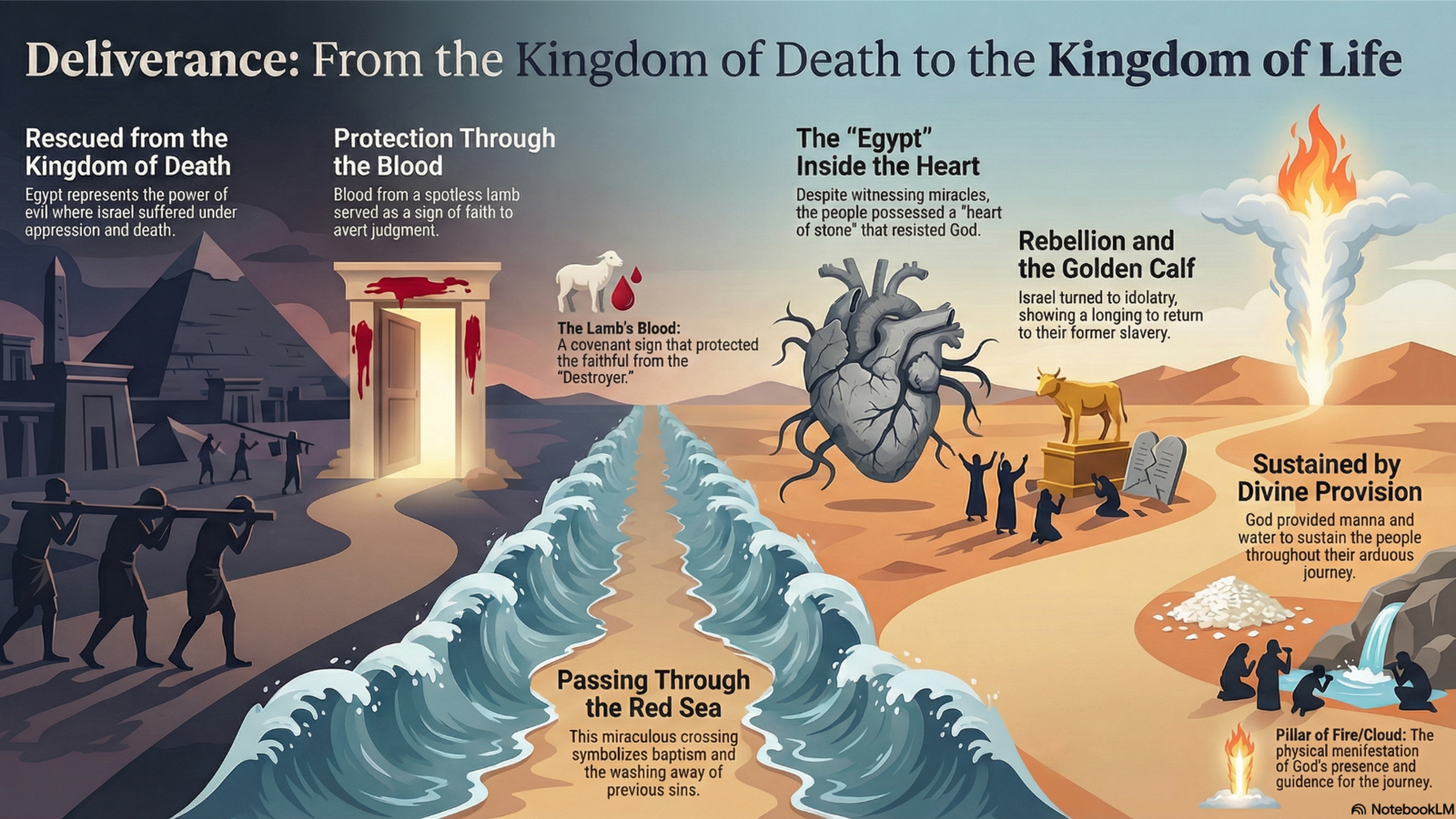
The kingdom of death itself was struck by death. But God also provided a way for His people to live. Families were commanded to take a male lamb without blemish, to slay it and place its blood on the doorposts. The blood served as a sign of the covenant and of the faith of the household, so that death would pass over those protected by it.
The lamb given by God took away the power of the “Destroyer” (mashkhit) to strike His people. In the New Testament, the devil moves throughout his kingdom, seeking to destroy humanity, to bring death, fear, and oppression. But the blood of the lamb was powerful enough to protect those under it.
God allowed events to unfold this way, and He wasn’t done. He led Israel out of Egypt in the most famous passage about Moses:
“The LORD went before them in a pillar of cloud by day and fire by night, guiding them out of Egypt” (Exodus 13:21).
“God made a way through the Red Sea; the waters covered Pharaoh’s army and they never pursued Israel again” (Exodus 14:27).
This is another type, a picture of baptism and our sins being washed away. They had passed from the kingdom of death and were now on a journey into the kingdom of God. But the journey didn’t end at the sea. In the wilderness, God provided manna and water, yet Israel looked back longingly toward Egypt, grumbling and eventually worshiping a golden calf (Exodus 32:1–6).
This story is frustrating—how could people who had seen so many miracles and experienced God Himself leading them still want to build a cow to pray to? They were supposed to be the people God would use to save the nations.
Honestly, we are not so different from them. Even now, it is easy to look at our own sin and compare ourselves to others. Before I got married I have had to confess that I struggled with lust and was addicted to it. It is easy to love the sin and want to return to it, even knowing the damage it does to ourselves and others. Moses told the people they had a hard, stubborn heart, a “heart of stone” that still resisted God’s ways (Exodus 32:9). My heart was just like Israel’s, still full of iniquity from Adam and Eve.
Even if God frees us, the Egypt inside us isn’t gone. Israel’s rebellion led God to allow consequences. He sent serpents—symbols of death and the devil—into the camp, attacking those who longed for slavery and sin (Numbers 21:6). But God told Moses to make a bronze serpent, and anyone who looked at it would be saved (Numbers 21:8–9).
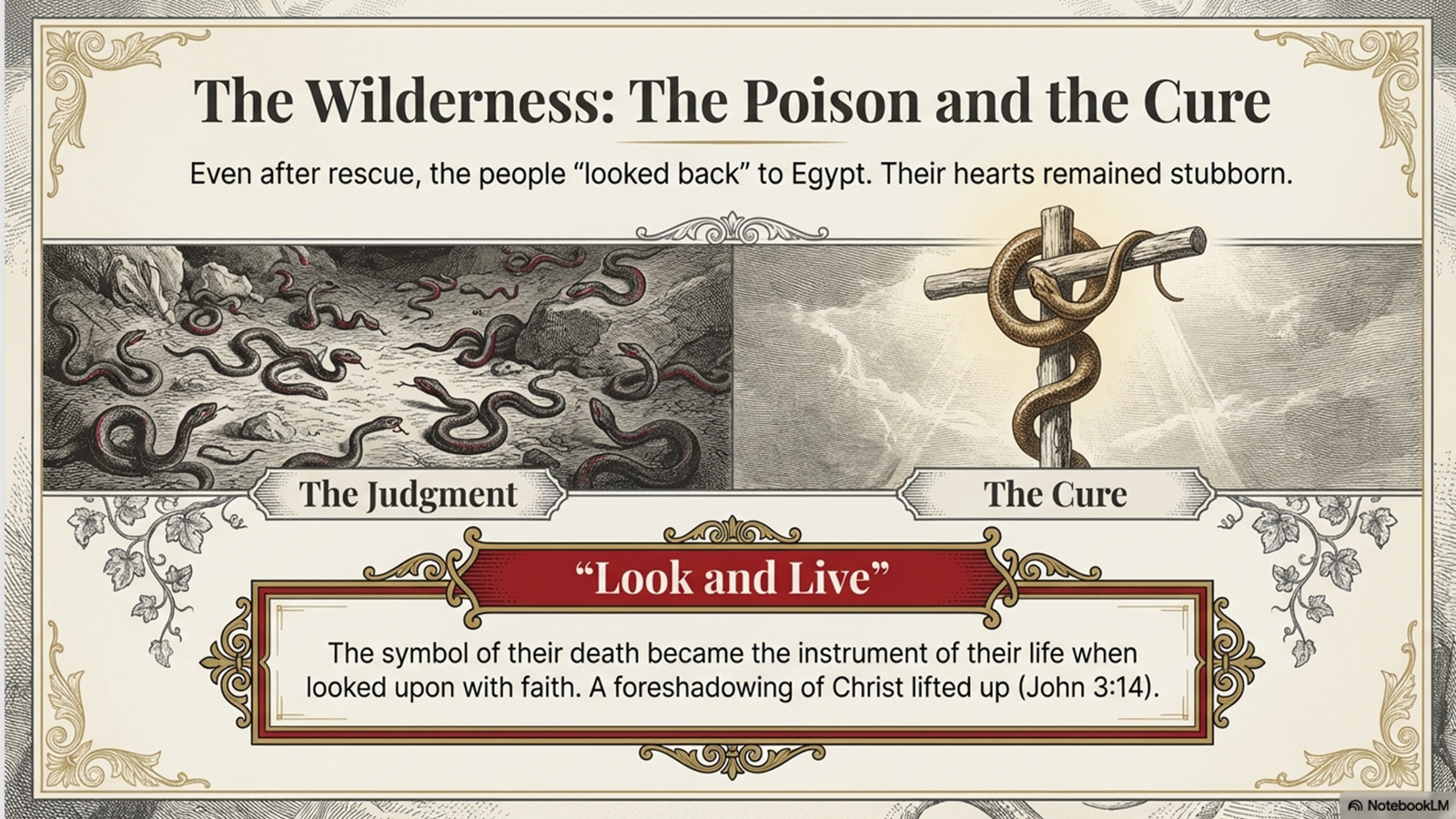
God used death to show life. The symbol of death became the instrument of salvation—just like the Passover. God ensures that we do not repeat the same rebellion by giving us a way to see and respond to His provision.
The Fall of Israel
God didn’t just rescue Israel and walk away. He gave them laws and commandments to teach obedience, worship, and dependence on Him (Exodus 20:1–21). He established the priesthood and the sacrificial system, and told Moses to build the Tabernacle, saying, “Let them make Me a sanctuary, that I may dwell among them.”
The Law, the Tabernacle, and the sacrifices were a way to show the real, external consequences of actions:
- Sin distorts what is good, infecting even the things that were meant to be holy (Leviticus 16:16).
- Sin violates trust, separating people from God and from one another (Isaiah 59:2).
- Sin creates guilt that must be dealt with (Leviticus 5:17), like a debt that needs repayment.
My porn addiction hurt my relationship with my wife before it could start. It took something meant to be pure and sacred and twisted it into selfishness and lust. It corrupted my character and broke trust between us.
Sin in itself is essentially a form of spiritual adultery; it represents a heart that has been seduced away from its "Covenant with God" to serve "other gods" or oneself. King David learned this after he committed his own act of adultery with Bathsheba:
1 For the choir director. A Psalm of David, when Nathan the prophet came to him, after he had gone in to Bathsheba. Be gracious to me, O God, according to Your lovingkindness; According to the greatness of Your compassion blot out my transgressions.
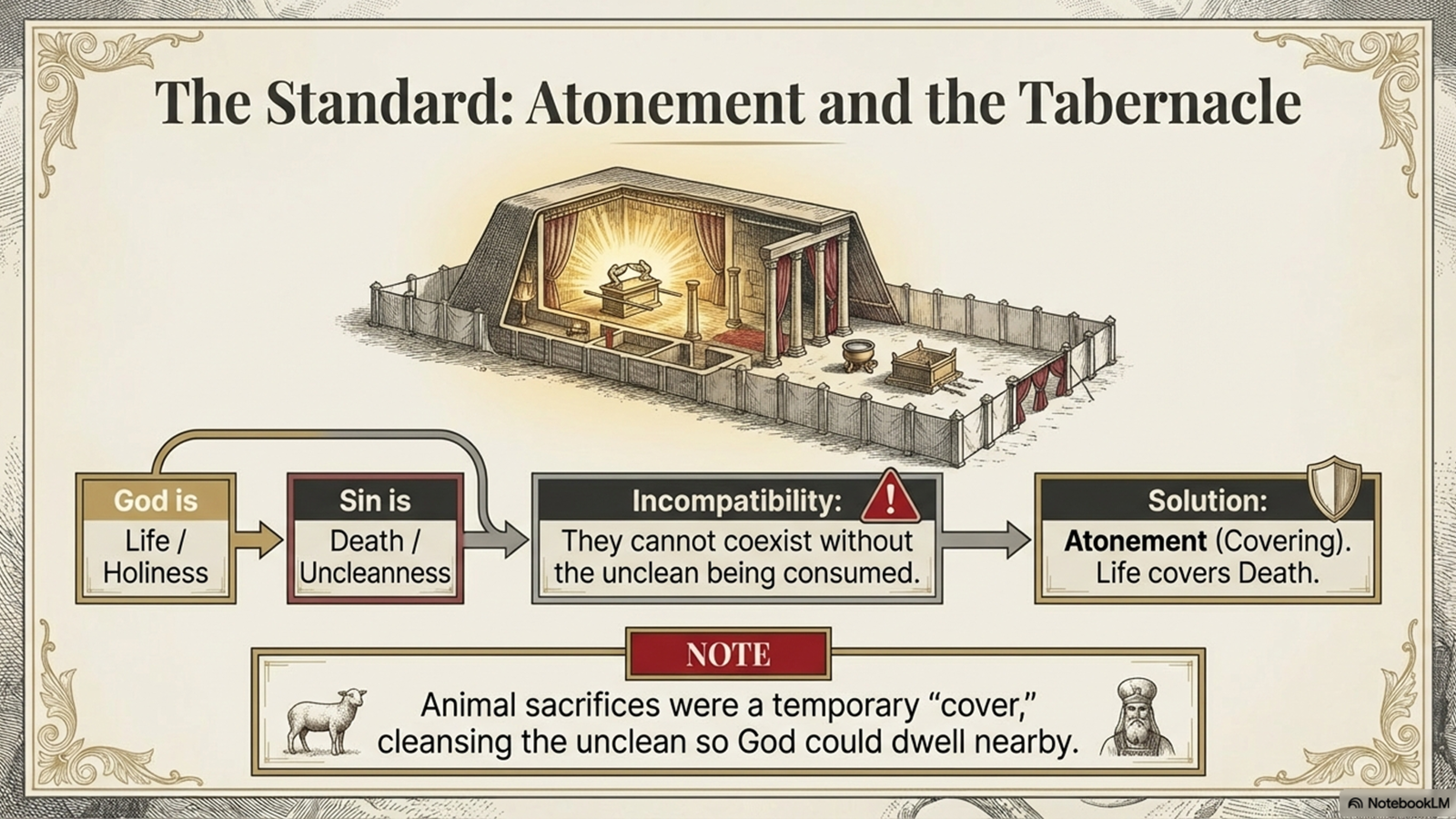
David’s plea isn’t just for forgiveness—it’s a request to be cleansed, made pure. Sin doesn’t just make us guilty; it makes us unclean, because sin always produces death. God made Israel’s laws about clean and unclean things to teach them this truth about sin. Anything associated with death—blood loss, decay, corpses—made someone ritually unclean. Not because those things were sinful, but because death is what sin produces. They all represent separation from the source of life—God Himself. Death cannot coexist with the presence of the living God without being addressed.
This is why Scripture says in Leviticus that sin can even defile God’s dwelling place (Leviticus 16:16). God’s presence is described as absolute life and perfection, making it inherently dangerous to anything corrupted by sin or associated with death. This is what the animal sacrifice system was all about: cleansing God’s people and God’s dwelling so He could stay with them.
The sacrifice system may seem barbaric, but it had a purpose. Sacrifice was a common practice in the ancient world—Mesopotamia, Egypt, Babylon, Greece, Rome—but God used it differently. God didn’t need the sacrifice; we did. Just as He stopped Abraham and provided the lamb Himself, Israel’s sacrifices pointed forward: God would provide what humans never could. Scripture is clear that animal blood could never truly remove sin—it was a sign. God used the blood of animals as a symbol of life applied to cleanse the corruption sin had done to them; this is called Atonement.
The sprinkled blood symbolized life applied where death had touched. It was a way of saying: life covers death. On the Day of Atonement, the high priest would use two goats: one for a blood offering to cleanse, the other—the “scapegoat”—to carry the sins away into the wilderness. This symbolized God removing sin so He could dwell with His people. Then the high priest could go before God and intercede for the people.
All these laws and rituals were designed to teach about sin and cleansing, shaping Israel into a holy people destined to bring the Messiah.
Prophet
Even with laws, sacrifices, and the priesthood, Israel repeatedly fell short. They adopted pagan practices, rejected God, and suffered oppression. God raised judges to deliver them, yet the pattern repeated because the hearts of the people remained unchanged (Judges 2:16–19). Over seven hundred years, Israel broke covenant after covenant—behaving like an adulterous spouse, even opposing God’s prophets and kings. Ultimately, their rebellion led to Exile: Israel to Assyria, Judah to Babylon.
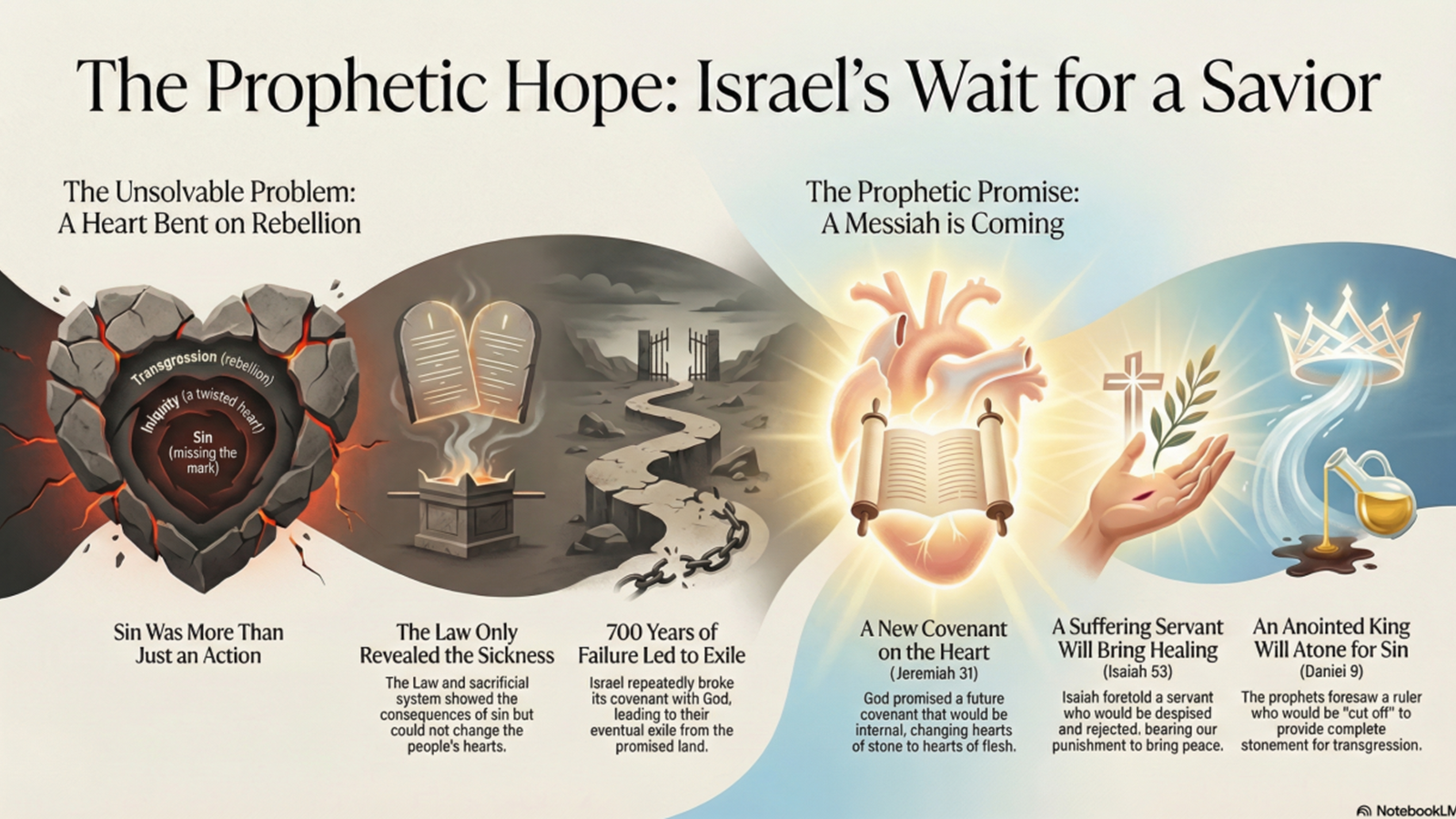
This is why Scripture calls the Law a temporary guide, showing how sin affects and preparing for something fuller (Galatians 3:19–24). Paul explains:
“Through the Law comes the knowledge of sin” (Romans 3:20).
The prophets foresaw a day when God would send His Messiah to fix this problem. For example, in Jeremiah 31, God promised a New Covenant that would be engraved on human hearts rather than on stone. Throughout the prophets, God reminded His people that despite their failure, salvation was coming to the world. Isaiah repeatedly foretold a suffering servant who would bear the punishment of the people, be despised and rejected, yet through his suffering bring healing, justification, and peace (Isaiah 53:3–6). The servant would be a light to the nations, not just Israel.
Other prophets echoed this promise. Micah foretold a ruler from Bethlehem who would shepherd God’s people in truth (Micah 5:2–5). Zechariah spoke of a humble king riding a donkey, whose sacrifice reconciles a rebellious people (Zechariah 9:9; 12:10). Even Malachi looks forward to when God would come to the temple and purify the hearts of His people (Malachi 3:1).
Even in exile, Daniel cried out for mercy. God revealed a timeline in Daniel 9, showing that the promised Anointed One—the Son of Man—would come, be cut off and suffer, and accomplish what sacrifices never could: complete atonement and the establishment of God’s kingdom.
The writer of Hebrews 11:1 reflected on that great hope the people of God had:
13 All these died in faith, without receiving the promises, but having seen them and having welcomed them from a distance, and having confessed that they were strangers and exiles on the earth.
39 And all these, having gained approval through their faith, did not receive what was promised, 40 because God had provided something better for us, so that apart from us they would not be made perfect.
Jesus
Jesus is the fulfillment of the Old Testament—God’s plan to deal with sin and rescue humanity. After His resurrection, He told His disciples that every Old Testament covenant, sacrifice, and prophetic type converges in Christ.
Think back to Adam in the garden. Adam chose his own will over God’s—“not your will, but mine.” Jesus is the Second Adam, who reverses that failure by praying, “Not my will, but Yours be done” (Luke 22:42). Adam brought death and was driven out of Paradise. Jesus brings life—and promises the thief on the cross, “Today you will be with Me in Paradise” (Luke 23:43).
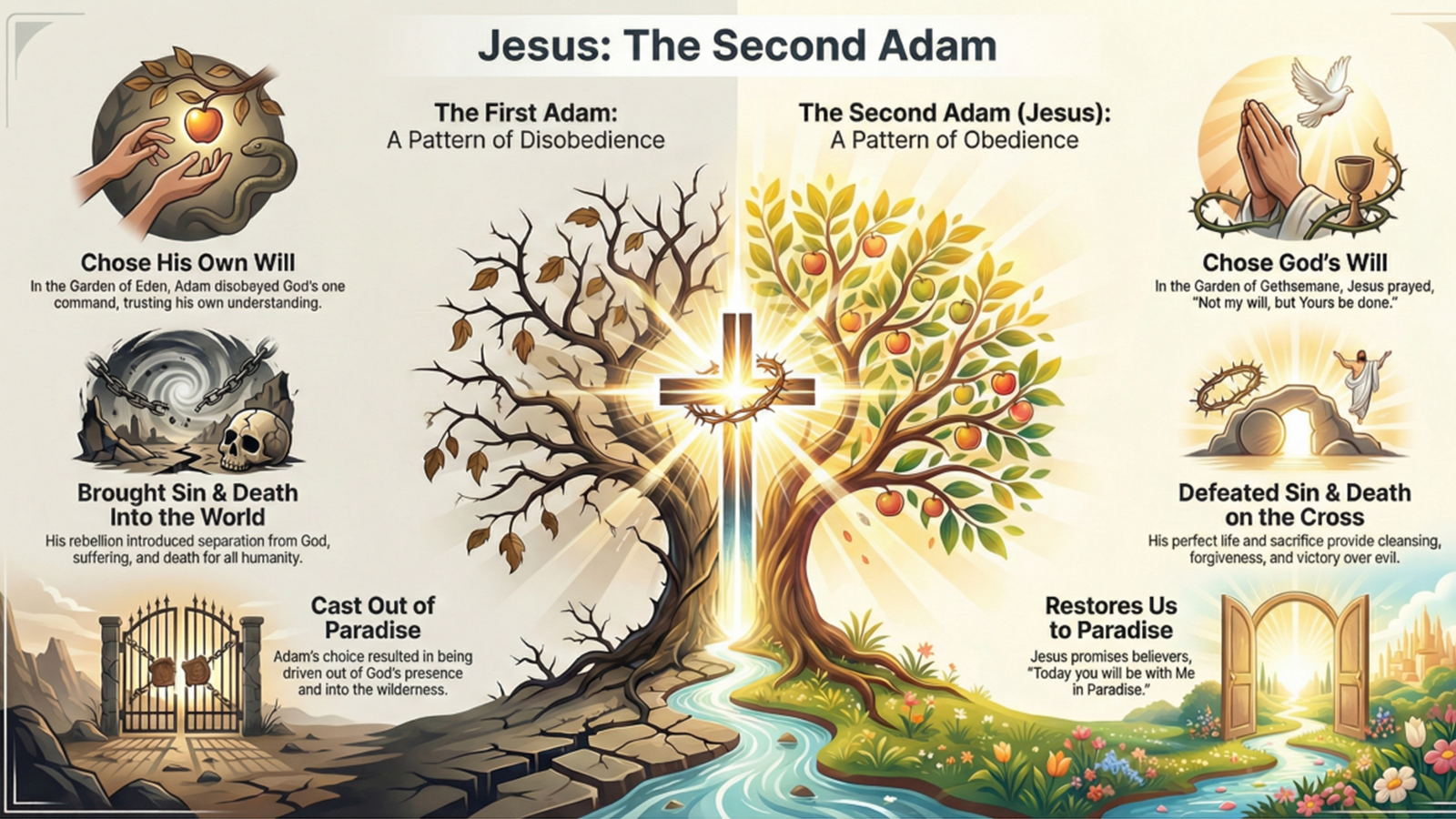
All the patterns in Scripture point to Him. God’s presence returns—not in a tent or a temple—but in a human body. Like Eden again, God dwells with humanity. Everywhere Jesus goes, the Kingdom of God breaks in—He heals the sick, forgives sins, and casts out demons. Light invades darkness (Mark 1–2).
This is a Kingdom not made by human hands.
- He is the one God promised to Eve, came to crush the devil, t
- The descendant promised to Abraham, through whom all nations are blessed (Genesis 22:18; Matthew 1:1).
- He is the promised ruler from David’s line, the Shepherd foretold by Micah, who will shepherd and rule God’s people in truth and righteousness (Micah 5:2–5).
- He is the God Malachi promised, the humble king Zechariah described, riding on a donkey to the temple, bringing salvation to the nations (Zechariah 9:9; 12:10).
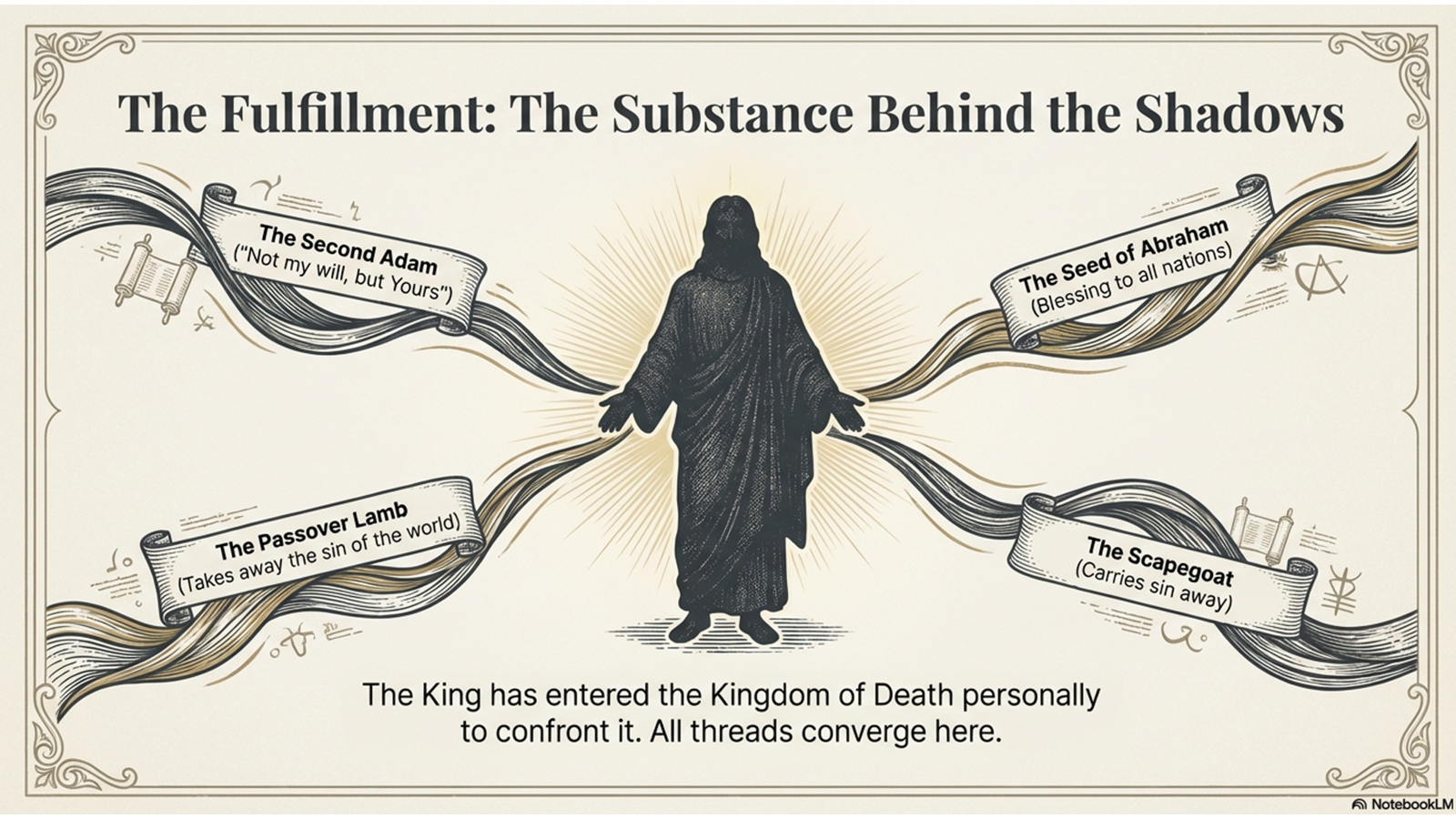
Even though His own people did not receive Him, God was not surprised and used it for His plan. Isaiah foretold Jesus as the suffering servant, despised and rejected by men, pierced for our transgressions (Isaiah 53:3–5), and Daniel foresaw that the Messiah would be killed. When He was killed, God’s kingdom did not fail, and Satan did not win. God, who told Abraham He would bear the cost of the covenant, carried the wood for the cross and gave Himself on the same mountain that Isaac was on.
The temple sacrifices and Passover show how this works. Just as the blood of the Passover lamb protected Israel from death, and the staff saved them from the serpent (Exodus 12:7, 13), the blood of Christ and the cross shields us from the kingdom of death and the devil. Just like the animals showed that life overpowers death and makes sin clean, His blood and life cleanse us from unrighteousness (Hebrews 9:12–14; 1 John 1:7). John the Baptist bore witness to Him, declaring, “Behold, the Lamb of God, who takes away the sin of the world!” (John 1:29), like the scapegoat that carried away Israel’s sins.
To receive this, Scripture directs us to John 3:16 and the wider context (, NASB):
14 'As Moses lifted up the serpent in the wilderness, even so must the Son of Man be lifted up; 15 so that whoever believes will in Him have eternal life. 16 'For God so loved the world, that He gave His only begotten Son, that whoever believes in Him shall not perish, but have eternal life. 17 'For God did not send the Son into the world to judge the world, but that the world might be saved through Him. 18 'He who believes in Him is not judged; he who does not believe has been judged already, because he has not believed in the name of the only begotten Son of God. 19 'This is the judgment, that the Light has come into the world, and men loved the darkness rather than the Light, for their deeds were evil. 20 'For everyone who does evil hates the Light, and does not come to the Light for fear that his deeds will be exposed. 21 'But he who practices the truth comes to the Light, so that his deeds may be manifested as having been wrought in God.'
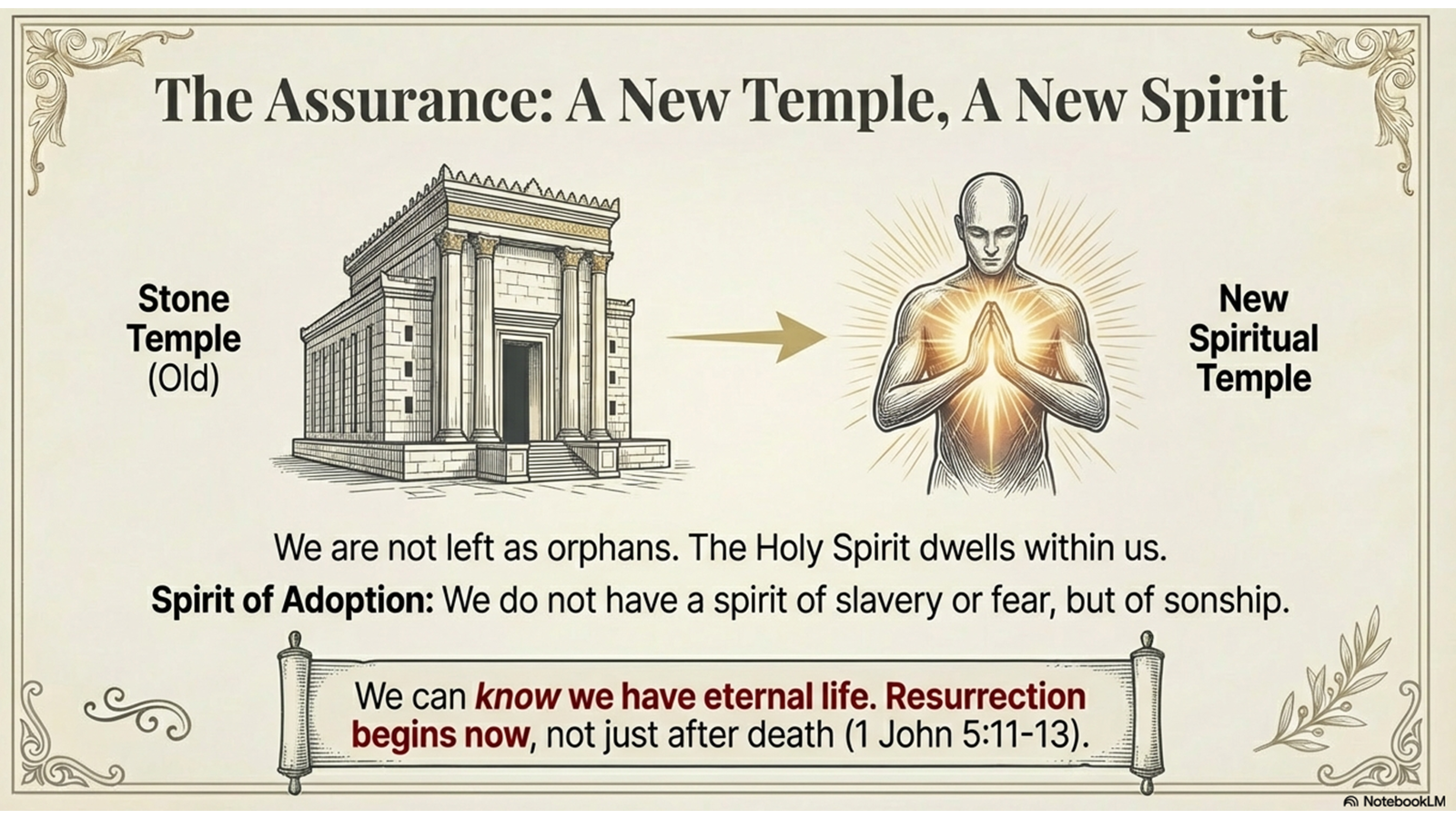
Just like Egypt was under judgment, we are too. But faith brings us into life. Jesus promised a Helper, the Holy Spirit (John 14:16–17), who dwells in believers. God no longer resides in a temple made of bricks and stone, but in a spiritual temple. When someone becomes a Christian, they become part of that temple, and the Spirit of God dwells in them (1 Corinthians 3:16; 6:19).
To become a Christian, one must hear the Gospel, trust in Jesus, and repent—turning from rebellion and agreeing with God about sin. Paul explains: “If you confess Jesus as Lord and believe God raised Him from the dead, you will be saved.” Obedience through baptism demonstrates this faith and marks entry into God’s kingdom. Romans 6:3–4 (NASB) says:
!Pasted image 20260404071624.png
3 Or do you not know that all of us who have been baptized into Christ Jesus have been baptized into His death? 4 Therefore we have been buried with Him through baptism into death, so that as Christ was raised from the dead through the glory of the Father, so we too might walk in newness of life.
But I'm a sinner
Lets say you have done all that, but what if someone is scarred that they lost salvation, they keep rebelling like Isreal did in the wilderness.
God is not a God of confusion, he doesnt' want you to have anxiety about it. Do not fear that God will only love you if you are perfect or follow every commandment. The amazing promise is that Scripture assures us we can know we are saved. 1 John 5:11–13. Unlike Israel you don't have a spirit of slavery to fall back into fear, but you have received the Spirit of adoption.” Christ has set us free of being burdened again by a yoke of slavery.”
The Spirit begins the work of transforming your heart, guiding you away from sin and helping you persevere.
Just like Israel had God leading them through the wilderness, we have spirit to guide us and remind us to look at the cross to be restored. At even though we will still physically die, we can be restored to life to God now.
This is why Christians talk about resurrection as something that’s already begun. I wasn’t just forgiven—I was dead in my sins. But God brought me back to life. He restored my relationship with Him, opened my eyes, and gave me a new heart that can now follow Him.
Even though my body will still die, I’m alive to God now. I no longer belong to death or slavery. Resurrection isn’t just something I’m waiting for—it’s the life God has already given me.
God calls us to go and proclaim this good news to the world, just as Jesus commanded: “As the Father has sent me, so I am sending you” (John 20:21).
18 And Jesus came up and spoke to them, saying, 'All authority has been given to Me in heaven and on earth. 19 'Go therefore and make disciples of all the nations, baptizing them in the name of the Father and the Son and the Holy Spirit, 20 teaching them to observe all that I commanded you; and lo, I am with you always, even to the end of the age.'
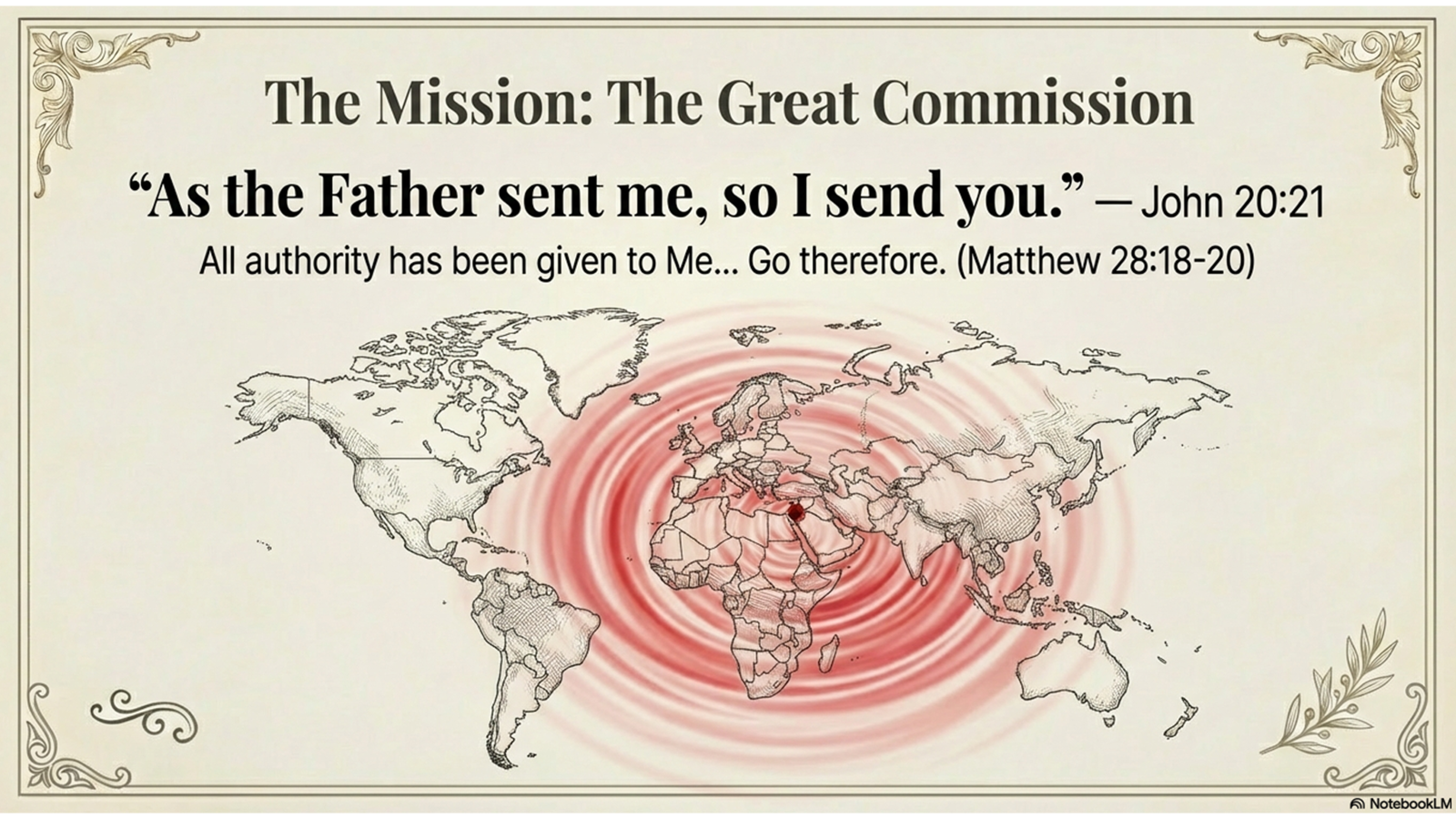
This is the Gospel, God Kingdom is here, will you enter in and receive life. He sends those He has saved to go, to proclaim, and to make disciples—so that others may leave death behind and enter the life of His kingdom.
How do you respond to the Gospel?